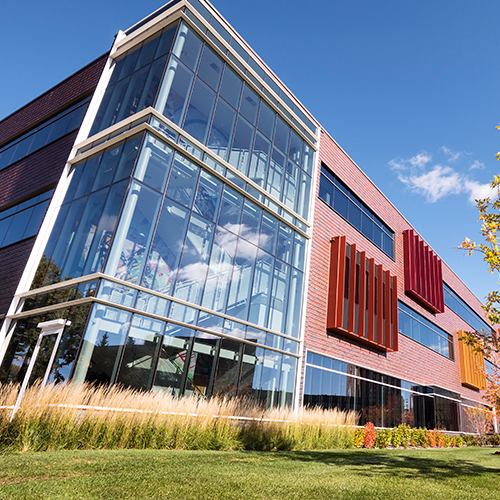
2211 Riverside Avenue South
Minneapolis, MN 55454
612-330-1000


M.A. Nursing Admissions home


M.A. Nursing Admissions Contact

612-330-1101
Fax: 612-330-1784
manursing@augsburg.edu

Hours

M - F: 8:30 a.m. - 5 p.m.

ACADEMICS - Course Descriptions

MAN studentNUR 500 Transcultural Health Care
This course explores meanings and expressions of health, illness, caring, and healing transculturally. Focus is on understanding and developing professional competence in caring for individuals, families, groups, and communities with diverse cultural backgrounds. Culture is examined as a pervasive, determining “blueprint” for thought and action throughout the human health experience. Patterns of human interaction that foster health and quality of life are analyzed, and health destroying patterns of interaction, e.g., stereotyping, discrimination, and marginalization, are examined and submitted to moral and ethical reflection. (36 hours of practice experience)

NUR 501 Topics in Transcultural Care Systems: Nursing Leadership and Complexity Science
In this course, organizations are viewed in the context of complex adaptive systems where continuous change and unpredictability rule the development and course of evolution. The importance of relationships, the role of self-organization (autopoeisis), the processes of emergence and co-evolution are explored via readings and discussions. Attendance at a local, national and/or international nursing leadership conference is mandatory. Dialogue and networking with a variety of nursing leaders to understand the context of transcultural healthcare organizations is expected.

NUR 503 Transcultural Health, Families, and the Life Cycle
The major curriculum concepts of individuals, health, nursing, and society are developed further in this course as the function of individuals living in families and in communities is explored. Content about systems, communication, small group, and nursing theories, introduced earlier, is applied to family constellation. The influence of the multigenerational family is examined in terms of culture, belief system, roles, and healthcare patterns, values, and goals. Specific concepts related to values and culture are expanded and applied to the more complex social structures of traditional and nontraditional families as they interact in and with society.

NUR 505 Theoretical Foundations for Advanced Nursing Practice
This course focuses on nursing science and nursing theory as foundational to advanced transcultural nursing practice. Philosophical underpinnings of different theoretical and research traditions in nursing are compared and related to the provision of culturally competent care in diverse communities. Nursing science is emphasized as a process of theory advancement and as an accumulating body of nursing knowledge. (36 hours of practice experience)

NUR 510 Advanced Community Health Nursing I
This course focuses on persons, families and groups living in relationship. Emphasis is on applying the core functions of community/public health – assessment, policy development and assurance. Principles of epidemiology, population demographics, and culture care are integrated into community-focused health care delivery models. Power structures within dominant social systems are analyzed and critiqued with regard to resource access and distribution among underserved populations. (72 hours of practice experience)

NUR 511 Advanced Community Health Nursing II
Emphasis is on the application of public/community health theory and research in providing health care to populations and communities. Essential public health services are assessed for adequacy in meeting community health needs and addressing health goals. The impact of diversity, privilege, resource limits, and globalization add depth and reality to local and global community health concerns, patterns of health, suffering, and health care provisioning. Prerequisite: NUR 510. (72 hours of practice experience)

NUR 515 Managing Nursing Effectiveness within Care Systems
In planning and implementing nursing activities, health- care organizations are considered subcultures of society, which entail particular issues of access and utilization for marginalized people. Strategies for negotiating structures of privilege and professional control will be explored. Working with marginalized populations, students will identify and support the agency or persons who are seeking help from these systems. Nursing action will focus on mediating subcultures of clients with the subculture of healthcare systems. Major emphasis will be placed on mutuality with clients in planning actions and evaluating outcomes. (72 hours of practice experience)

NUR 520 Research Methods in Nursing
Through a combination of literature review, field experience, and class discussion, research methods relevant to the exploration of culture and health will be examined. Class topics will include formulating study questions to explore collective foundations of meaning and explanation in health and illness, practice in data collection procedures of field research, and issues of interpretation and analysis in qualitative research. (pre-requisite: a college-level statistics course)

NUR 521 Transformative Nursing Leadership
This course emphasizes transformational nursing leadership and management in partnership with diverse groups. Transcultural competence is lifted up as significant to the evolving leadership and planning skills needed in emerging care systems. Opportunities for students to engage in designing relevant models of care delivery are woven into clinical practica. (72 hours of practice experience)

NUR 523 Theory, Research, and Practice Seminar
Through a combination of literature review and class discussion, conceptual models of nursing will be critiqued for their effectiveness, their relevance, and their substantiation. The conceptualization, investigation, and application of nursing knowledge will be critiqued with particular focus on the contribution to developing practice in transcultural community health care. Through reflection and dialogue, which includes professional experience of practice contexts, as well as theoretical and research literature, students will formulate a transcultural nursing model of care. (72 hours of practice experience)

NUR 525 Graduate Field Project
This course focuses on the application and integration of knowledge to a student-selected issue or topic of concern relevant to transcultural nursing, community health nursing, and/or transformational nursing leadership. Working with a nursing faculty adviser, students design and/or implement and evaluate a theory-based model of advanced practice nursing. Relevant coursework is integrated into the project and the final written report. Plans for disseminating the report for public and professional use are encouraged. Students will defend the project to their graduate committee (major faculty adviser and two readers) and invited guests at the time of completion.

NUR 530 The Power of Ritual and Ceremony for Transformation
In this course, the student will explore ritual and ceremony from a transcultural perspective. Attention will be focused on rituals and ceremonies in specific cultures and religions, and in the modern American medical system that sustains its own rituals. In some cultures, formal or informal religious practices may be integral to the ritual of ceremony and healing. In modern American culture, the perceived division between the mind, body, and spirit has led to ritual and ceremony being considered adjunctive to the scientific approach to healing. Students will have an opportunity to interact with persons who integrate ritual and ceremony into their lives and healthcare practices. Students will also discuss the meaning of ritual and ceremony to their own lives and professional practice.

NUR 532 Transcultural Healing Practices
This course will introduce students to complementary healing practices including the historical and cultural contexts in which they developed. Students will discuss the philosophical underpinnings of therapeutic systems and paradigms of healing in selected complementary therapies. Selected complementary therapies are: music therapy, traditional Chinese medicine, mind-body healing, spiritual and faith practices, energy healing practices, movement therapies, homeopathy, manual therapies, and nutrition and nutritional supplements.

NUR 535 Integrative Master’s Thesis
The integrative thesis expands upon or extends the theoretical foundations in the literature of Transcultural Nursing in Community or Transformational Leadership and Management. It demonstrates the student’s ability to do independent research that integrates past and current literature appropriate to the topic, the collection and analysis of empirical data, and the articulation of implications for advanced nursing practice or leadership in nursing organizations. Students will defend the project to their selected graduate committee (comprised of the student’s faculty adviser and two readers) and invited guests. Plans for disseminating the report for public and professional use are encouraged.

NUR 541 The Politics of Health Care
This course will explore how health and illness are related to inequities in society and dynamics of power in systems of health care. The following issues will be examined in the course: How widening gaps in the distribution of wealth diminish the health of all members of society; how social inequities become medicalized as health disparities, how an emphasis on profit in health care affects the distribution of healing resources in the population, and what strategies the poor and powerless employ to gain access to healthcare resources. This course will include an optional study abroad experience in Guatemala. (72 hours of practice experience)

BUS 520 Management of the Healthcare Organization
This course provides an overview of the key organizational and behavioral concepts that underlie effective management practices in healthcare organizations. It addresses both the theory and practice of effective management. The course will emphasize the importance of addressing the expectations, needs, and performances of people in organizations, and recognizes the role of the internal, external, and global cultures that impact organizational structure, behavior, and change.

ECO 520 Economics of Health Care in a Global Community
At the end of the class, students will be better able to apply economic concepts to the health systems of both the United States and other parts of the world. The focus will be on the public policy aspects of the healthcare system, e.g., issues of access and cost.

ML 510 Visions of Leadership: A Historical and Literary Journey
Introduction to selected concepts of leadership, providing a historical and philosophical framework for the program. This course views the nature and purpose of leadership from a variety of disciplines and perspectives.

ML 511 Creativity and the Problem-Solving Process
Exploration of creativity from the perspective of traditional aesthetics as well as contemporary organizational thinking. This course uses creativity as a method, and it examines techniques for solving problems in organizations, for enhancing innovation, and for seeking an integrative worldview.

ML 527 Spirituality and Leadership in the Workplace
The wide-ranging spirituality movement in the workplace is a notable feature of contemporary life. This course explores the dimensions of this trend and its implications for leadership through a variety of sources and perspectives.

ML 530 Ethics in Communication
Interdisciplinary study of ethics and communication through the investigation of a variety of ethical perspectives within human communication. This course places particular attention on the use and abuse of communication in politics, advertising, and interpersonal relationships. It emphasizes sensitivity to ethical conflicts that arise in social and organizational settings.

ML 531 The Dynamics of Change
This course offers an exploration of the context of social change and varying responses to diverse human needs. Ways of achieving well-being may be viewed differently by leaders in public and private domains and across cultures. The course explores these various perspectives, including areas of conflict and opportunities for leadership in social and organizational change. Sociological, human development, and economic theories are applied to contemporary public and private sector issues for social change.

ML 535 Organizational Theory and Leadership
In-depth exploration of organizational theory plus related concepts, issues, and concerns. The course is designed to enable the student to acquire knowledge and develop skills in order to function as a responsible, ethical participant within various types of organizational structures and cultures.

ML 560 Developing a Multicultural Perspective
This course focuses on the ability to function and lead in culturally diverse contexts within the U.S. Goals include improved communication skills and interpersonal sensitivity, appreciation for the complexity of the racial and ethnic groupings, and awareness of key issues facing those groups

ML 565 Women and Leadership
A seminar exploring the theory and practice of women and leadership: entrepreneurial, political, and social. An interdisciplinary approach to issues of women and leadership. Topics include analysis of alternative approaches to leadership, women and careers, and women in society past and present. The course is intended to enhance the analytical and leadership skills of the participants.

NUR 599 Topics
Study of selected topics that are not treated extensively through current course offerings. Specific topics will be published prior to registration.

Copyright © 2008 Augsburg College. All rights reserved.
Comments, questions, or feedback can be directed to: webmaster@augsburg.edu