


You can measure success by looking at the scoreboard, and you can measure it by asking whether your players are winning in academics and in life.
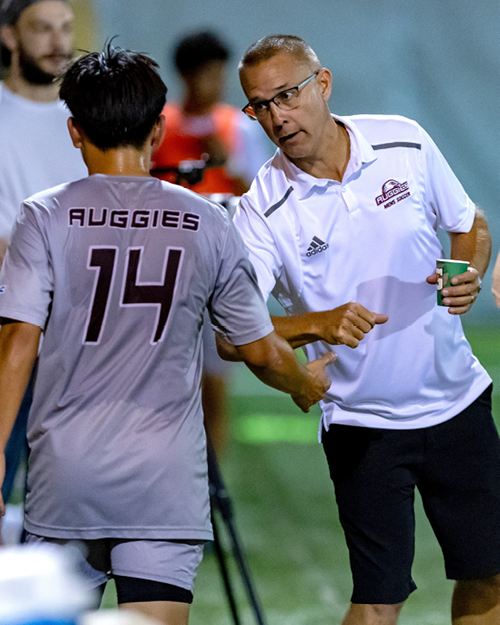
Greg Holker, head coach of the Augsburg University Men’s Soccer team, is always conscious of his team’s record. But he’s more interested in how each student-athlete on the team approaches their Augsburg experience.
The Auggies had an exceptional season on the field—taking an 18-2-2 record and a #2 national ranking into the NCAA tournament—where they made it to the Elite Eight. They also had some tough losses, with two ties after giving up goals late in a game where they had held a lead.
“We live by the model that things happen for you—not to you—in life,” Holker said. “Losing and even playing poorly in a win are opportunities to embrace the challenge of making us better people and players and improving the team. How we respond the next day is the most important thing.”
Learning from mistakes and resetting are core values in Holker’s locker room. “You can dwell on the five seconds where mistakes cost us a result, or you can focus on the hundreds of minutes of playing time over the course of the whole season where we played great. We had this outstanding season because of our commitment to each other and our ability to work through adversity. Reframing a mistake as part of a larger whole is a critical life lesson,” Holker said.
Midfielder Mitchel Munzing ’26 sees the team’s success on the field as a direct result of the culture of learning and compassion they cultivate off the field. “Whatever gets said during a practice or game—from a player or coach—we know it’s coming from a place of love where we want to make sure we prioritize the team’s best interest. This lets us have that competitive drive on the field and know that it’s balanced with compassion and clear communication,” Munzing said.
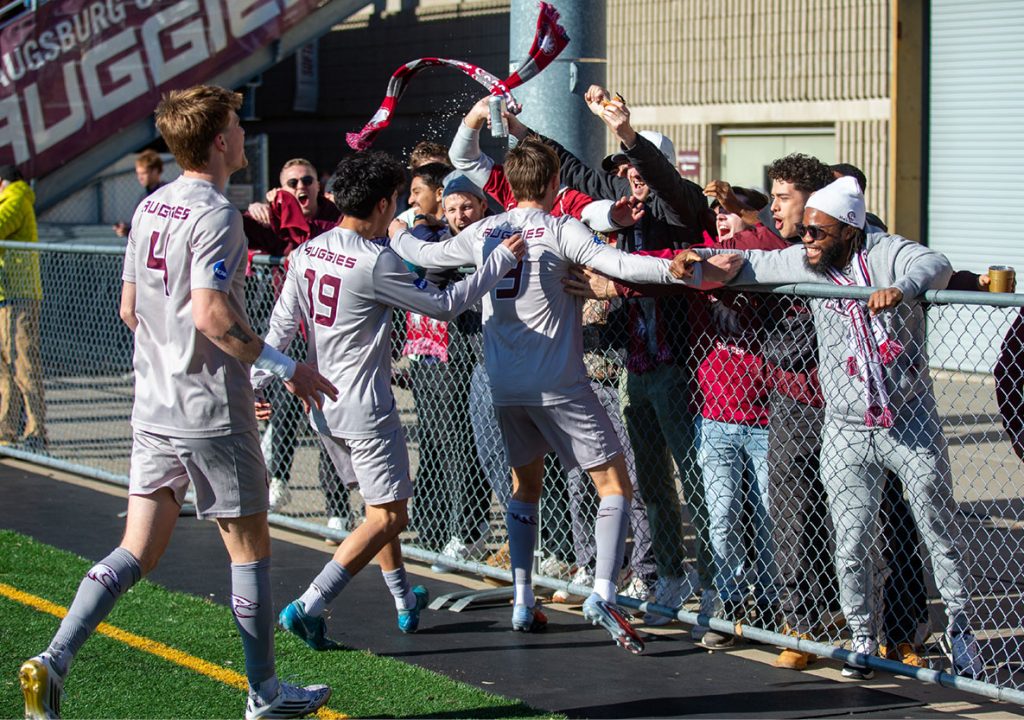
Staying fully committed to soccer, academics, and life’s many other priorities is a challenge faced by all student-athletes. Holker and his coaching staff emphasize balance. “We hold everyone to very high standards, and we’re also empathetic to everyone in their circumstances. We have players with stories in their lives that people don’t know about—a sick family member, for example. Something like that truly is more important than soccer,” Holker said. “We encourage everyone to take care of their personal lives, which might mean missing a practice or game to go home and support your family.”
Holker has served as head coach of the men’s soccer program for over 20 years, and his approach comes from seeing again and again that student-athletes do better at their sport, their academics, and the rest of their life when they are able to take care of themselves. “When players don’t perform well on the field, it doesn’t have anything to do with their ability to play soccer. It has to do with what’s going on in their lives. Our job on the coaching staff is to recognize that and help them figure it out in a safe, healthy way.”
That balanced support from the coaching staff, according to defender Jeffrey Richter ’26, ensures that everyone can focus completely on soccer when the starting whistle blows. “Our coaches understand we are students with academic responsibilities, and they check in frequently about our studies. And when we take care of things in the classroom, we can be more focused and confident when it comes to game time,” Richter said.
Richter prizes the collaborative team culture, noting how the coaching staff insists on critical thinking. “Coach Holker doesn’t just give us answers. He encourages us to think for ourselves and solve problems as they unfold during a game. That allows us to grow as players and as thinkers of the game,” he said.

How does this season compare to other teams that have made a big push into the postseason? “We’ve been rebuilding since the pandemic,” Holker shared. “This year is the culmination of building the program back, guided by coaches but really a credit to the team’s hard work and the collaborative spirit of the players across the roster.”
Win or lose each game, Holker leads a program that advances the Augsburg experience—developing young people as they learn to be responsible individuals and thoughtful members of the community. He reminds his players that they’re part of something much bigger than this season: “The teams of the 1970s were extremely successful, and many of those alums show up at games and continue to be stewards of the program. Their connection to each other and to the program today means a lot to us, and we want to honor all of that.”
Top image: The 2025 Augsburg University men’s soccer team. Photo by Don Stoner.
You Might Also Like

What does your friend group mean to you?
- on March 10, 2026
Dusting off the fight song
- on March 05, 2026