

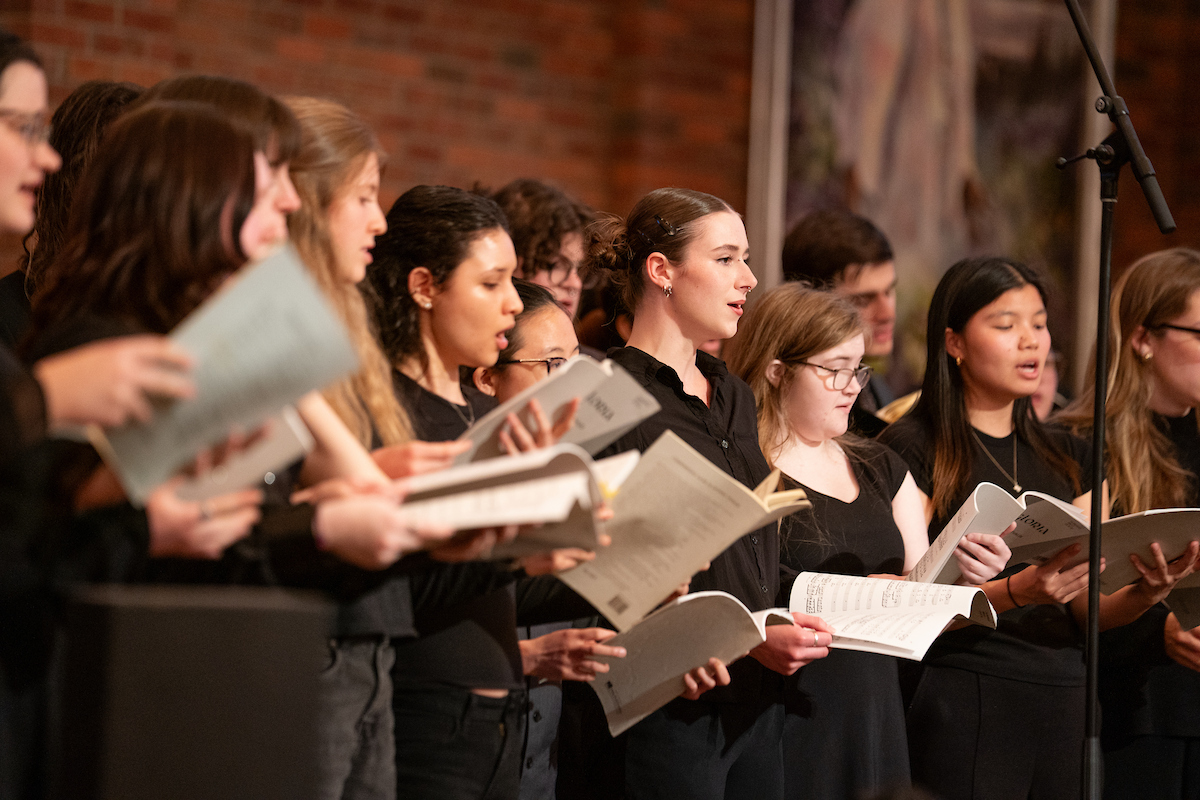
 Jennaya Robison is just a few months into leading Augsburg University’s storied choral program, and exciting things are already happening.
An unscheduled opportunity arose for the choir to perform “Gimikwenden Ina (Do You Remember?),” a piece from Canadian Indigenous composer Corey Payette’s musical, “Children of God.”
“The musical is a story about two native children forced to go to a residential boarding school,” Robison shared. “The piece is in Ojibwe, and a student in our choir who is Ojibwe helped us with the language and shared with us that in the text of this piece are some of the first words Ojibwe children learn: ‘Do you remember, your mothers and fathers?’”
Even with little advance notice, not a single member of the choir missed the performance. “They wanted to do it,” Robison said. “It was a transformational experience for all of us. Singing in worship adds additional purpose to our work.”
Robison points to that experience and to many others where the connection with one another, the music, and the community are full of meaning as “why you come to college to study the arts.”
Robison’s philosophy in programming great choral music is to stay close to the choir and its context. “The best way to create a culture of belonging is to see yourself reflected in the repertoire you’re singing,” she said. “We perform diverse repertoire because we need to know about humanity generally and because at Augsburg, if we’re going to see ourselves in the repertoire, we have to program well outside the usual canon for Lutheran collegiate choirs.”
Preparing Augsburg students for a career in professional choral music means ensuring they are familiar with various “choral traditions.” But Robison notes we are also in the middle of significant shifts in what professional expectations are and how we define those traditions. “Because of the many ways Augsburg University embraces and supports difference and change in its curriculum and student body, it is a wonderful place to be teaching choral music as our repertoire and the tradition itself shifts and evolves. For anyone who wants to work in choral music, Augsburg is an exciting place to study—at the front edge of this new wave of higher education that is multicultural, open, compassionate, and flexible.”
Robison came to the Twin Cities three years ago to become artistic director of the National Lutheran Choir, a Minneapolis-based choir founded in 1986 by Larry Fleming, who also taught and led choirs at Augsburg. This summer, Augsburg University announced a collaboration with the National Lutheran Choir (NLC) to have the 70-voice NLC in residence at Augsburg for rehearsals and educational programming, including a conducting institute for high-school and undergraduate students and student internships related to choral music and Augsburg’s highly-touted music business program.
“Augsburg was very supportive from the beginning. Part of NLC’s mission is to expand sacred choral music, and Augsburg is clearly committed to expansive, pluralistic approaches to higher education,” Robison said. “With that much alignment of mission between the two organizations, I am confident that we can continue increasing access to choral music—for audiences as well as for those in the choir and those who would like to join the choir.”
In Robison’s view, higher education, church music, and performing arts are at a crossroads. “We need each other. And if we can share resources wisely and with a clear shared purpose, we will not only survive these challenging times but will succeed in making our communities stronger and more vibrant. When singers from NLC and Augsburg are standing side-by-side, we’ll be not only creating great music together but will be forming a community in which everyone is learning and expanding their view of what choral music is and can be.”
You Might Also Like
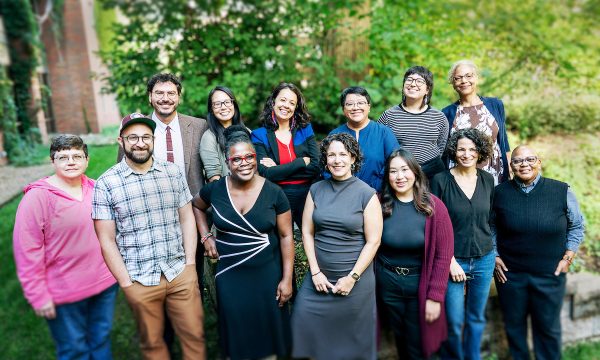
Empowering future social workers
- on October 27, 2026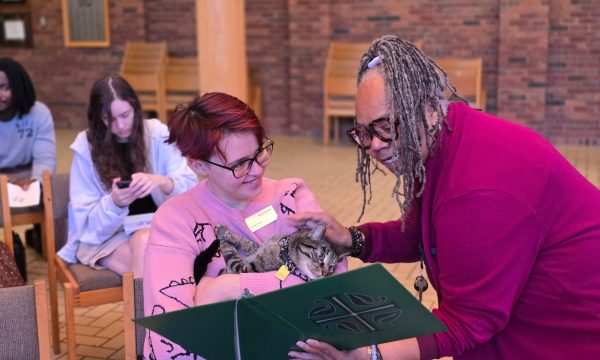
Blessing the Auggie animals
- on October 06, 2026