
Nose cone. Airframe. Apogee. Newton-seconds.
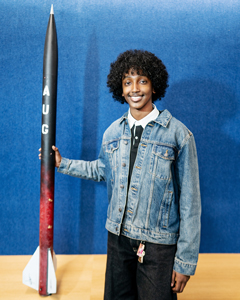
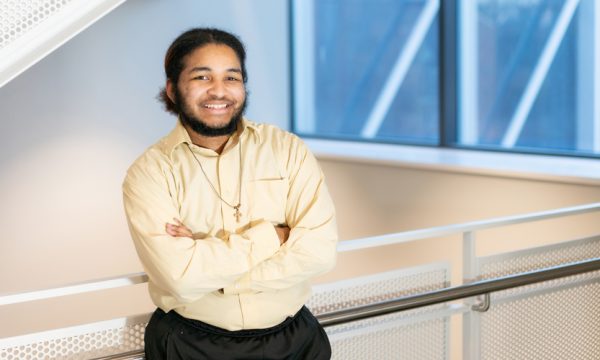
Mubarak Abdi ’27 sketches in the air with his hands as he describes what it takes to put together a rocket from scratch, a process he likens to building with Legos. “If I had a rocket, I’d show you,” he laughs.
Abdi speaks the language of rocketry with a fluency that suggests long familiarity. But in fact, he built his first rocket less than two years ago, when a friend invited the recent transfer student to check out the Augsburg Rocket Club during Fall 2024. Abdi, who was contemplating a future in robotics at the time, thought it sounded like a fun way to try out engineering.
Today, the physics major from Green Bay, Wisconsin, holds a national high-powered rocketry certification and serves as one of the facilitators of the Intercollegiate Rocketry Challenge, a program of the Minnesota Space Grant Consortium. In this role, Abdi leads regular Zoom workshops for rocketry clubs from a diverse group of seven institutions around Minnesota, including Minnesota State University Moorhead, Gustavus Adolphus College, and Fond du Lac Tribal and Community College. In the fall, the groups learned to build “dual deploy” (two-parachute) rockets from kits. This semester, they’re using what they learned in the fall to construct their own airframes along with a sophisticated suite of electronic sensors that will collect and log data at least once per second.
Several of these institutions, including Augsburg, will compete in the 2025–26 Space Grant Midwest High-Power Rocket Competition launch day in May, which takes place on a private sod farm in North Branch in partnership with the Minnesota chapter of the national Tripoli Rocketry Association. Abdi explains that this year’s competition involves “roll control,” or devising a mechanism to control the direction and degree of spin during flight. Teams will also use a downward-facing camera to decode a message displayed on the ground before landing their rockets safely. He expects the rockets to reach an altitude of up to 3,000 feet based on their motor size.
Daniel Hickox-Young, an assistant professor of physics at Augsburg, works with Abdi and Augsburg’s rocketry team as a mentor for the Intercollegiate Rocketry Challenge.
As a computational physicist, his own research in materials science involves quantum-based simulations of structure-property relationships (in layman’s terms, “picking interesting materials to understand how they work”) rather than direct experimentation. But being at Augsburg provides plenty of creative ways to work with students. For Hickox-Young, this includes supervising summer research; teaching “Physics for Fine Arts,” which uses the arts as an entry point to explore physics principles and the scientific method; and learning alongside amateur rocketry enthusiasts about fin placement and microcontroller programming. Weaving in and out of the classroom, these different threads contribute to an evolving curriculum. Next year, Augsburg’s School of Natural Sciences will debut an engineering minor, which Hickox-Young helped design along with Professor Moumita Dasgupta (physics) and Assistant Professor Jacob Troutman (chemistry).
Abdi and Hickox-Young are part of a rewarding and close-knit STEM lineage at Augsburg, one of three founding members of the Minnesota Space Grant Consortium. The consortium is part of the NASA-funded National Space Grant College and Fellowship Program, a network that spans all 50 states plus the District of Columbia and Puerto Rico. All Minnesota Space Grant affiliate institutions offer specific, NASA-themed opportunities for their students as a means of advancing aerospace education. Since 1991, Augsburg’s Space Grant program has provided scholarships and paid research opportunities for Augsburg students, educational events for the campus community, and support for K-12 teachers with the latest tools for science and mathematics education.
In early February, Abdi delivered a poster presentation about the Intercollegiate Rocketry Challenge at the consortium’s annual student symposium at the University of Minnesota Duluth. While in Duluth, he also took the opportunity to tour the facilities of aviation company Cirrus Aircraft. While all of his five older siblings have gone into health care, Abdi is now set on pursuing aerospace engineering after graduation. The hands-on aspect of rocketry, and the opportunities he’s had to learn, teach, lead, and launch, hooked him.
“Building stuff that flies is so cool,” he says.
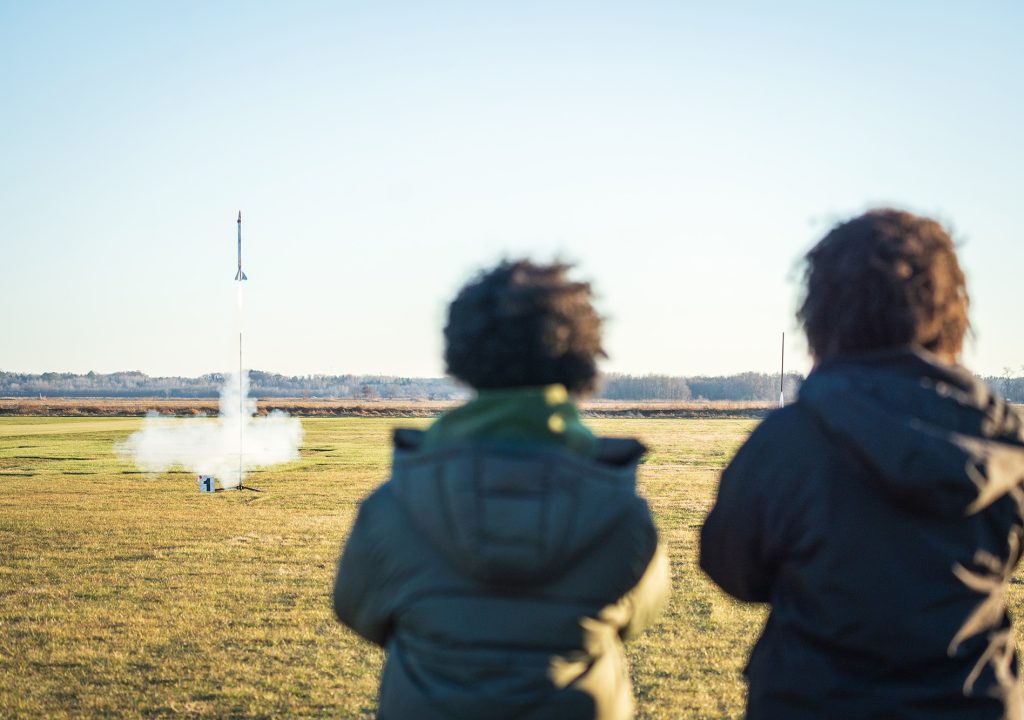
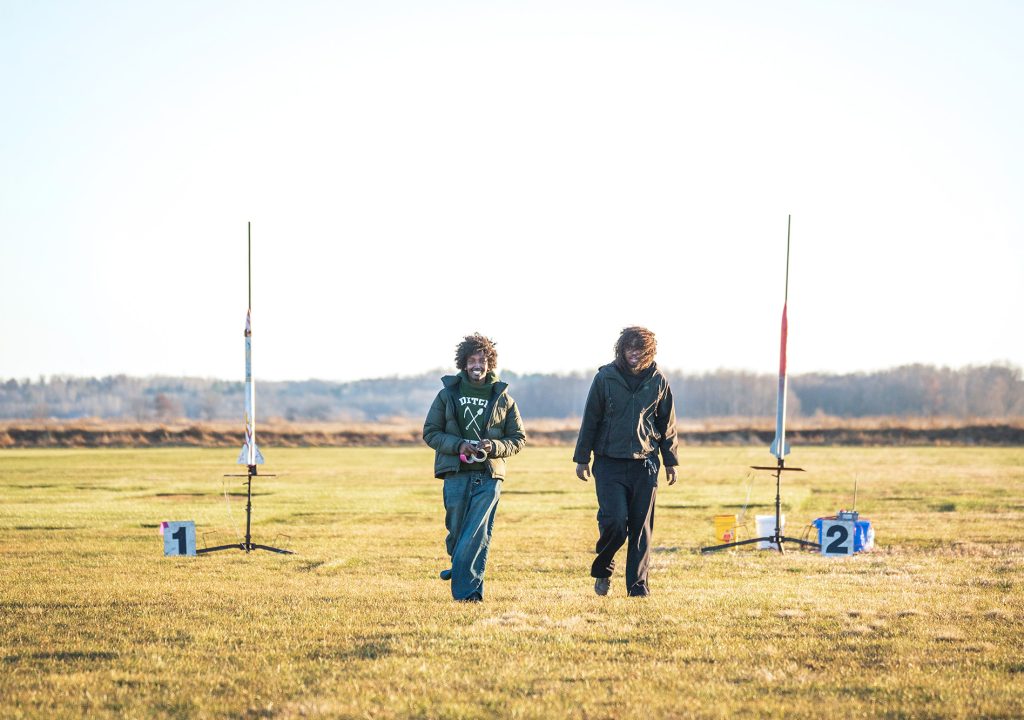
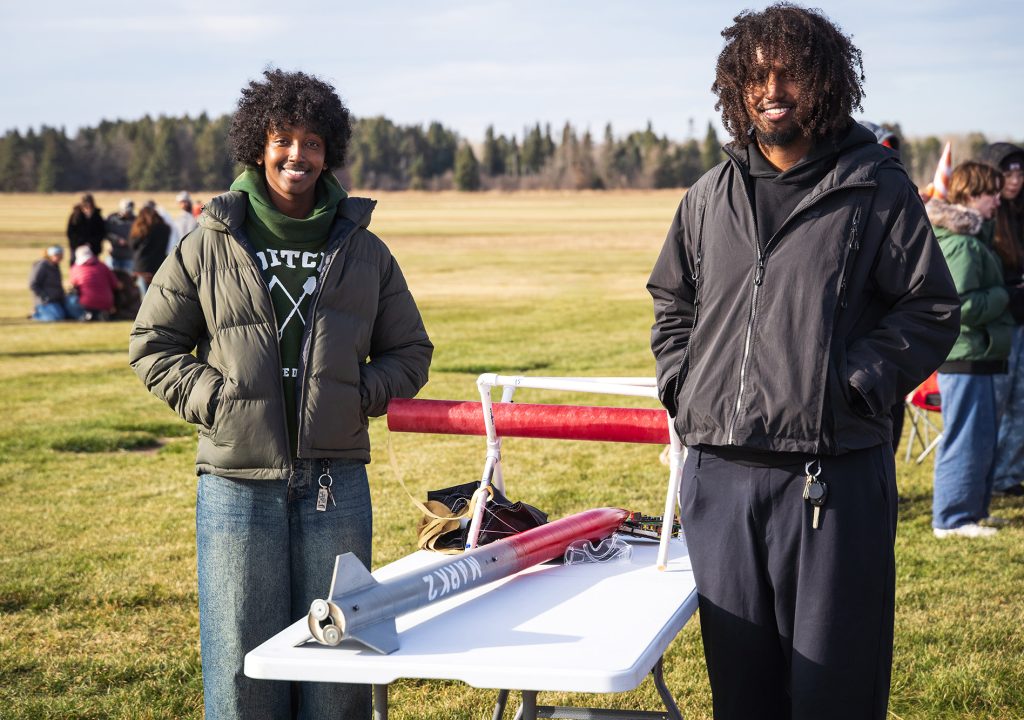
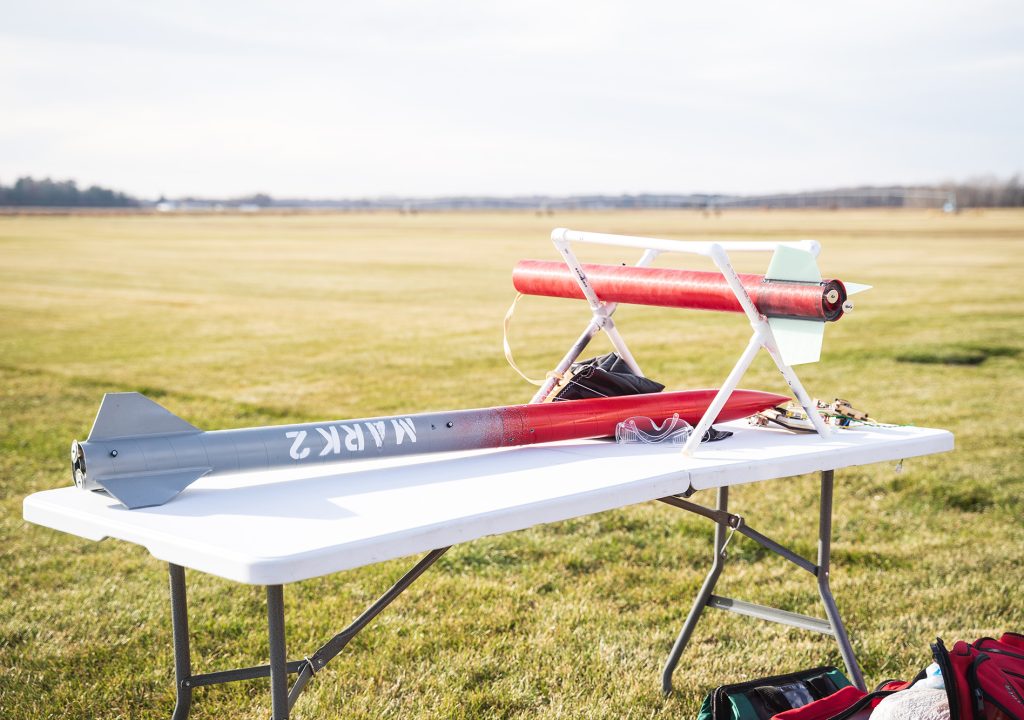
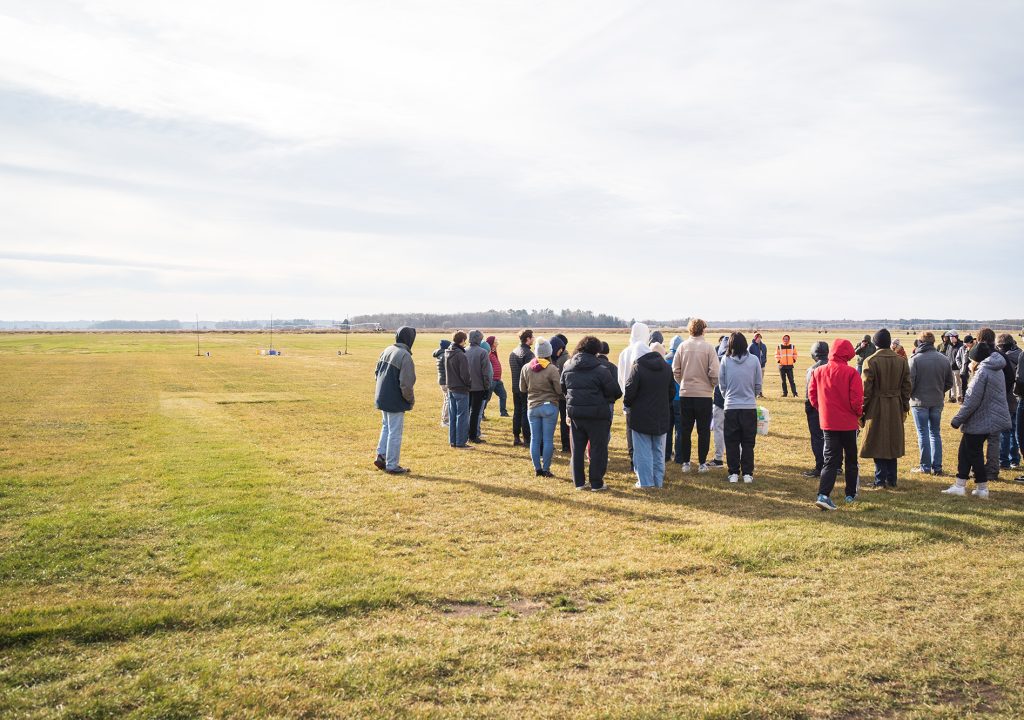
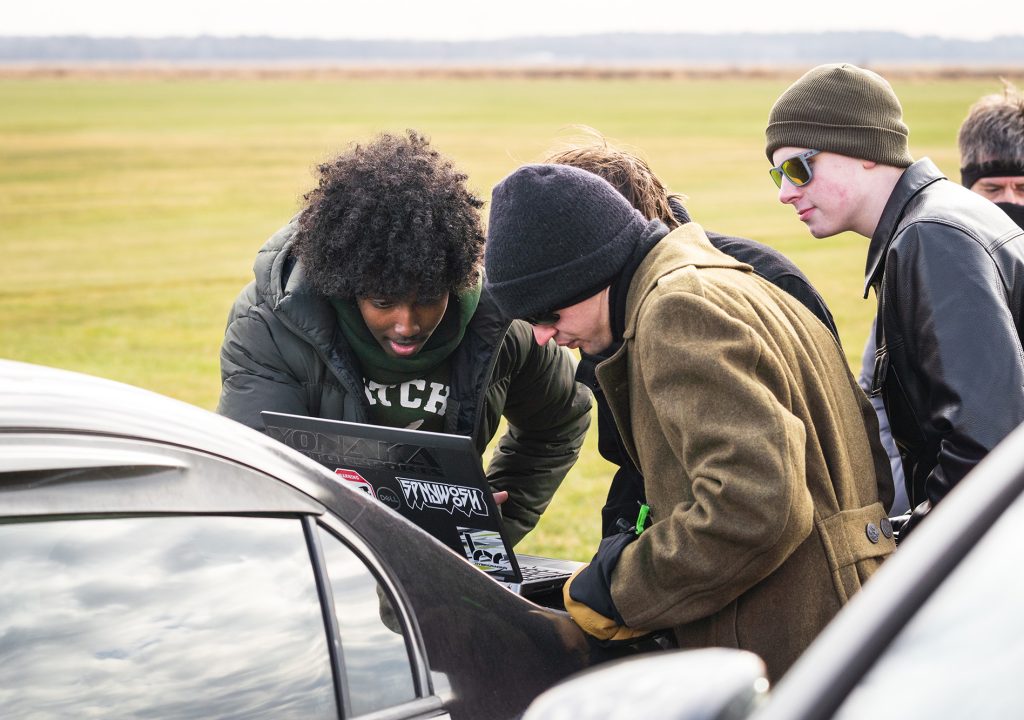
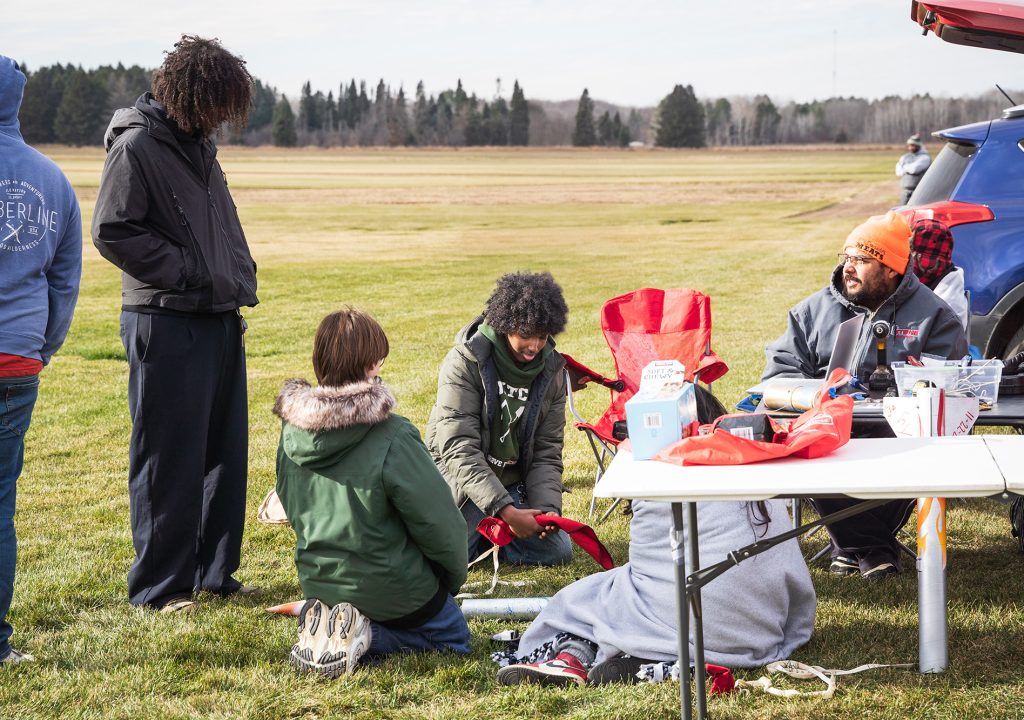
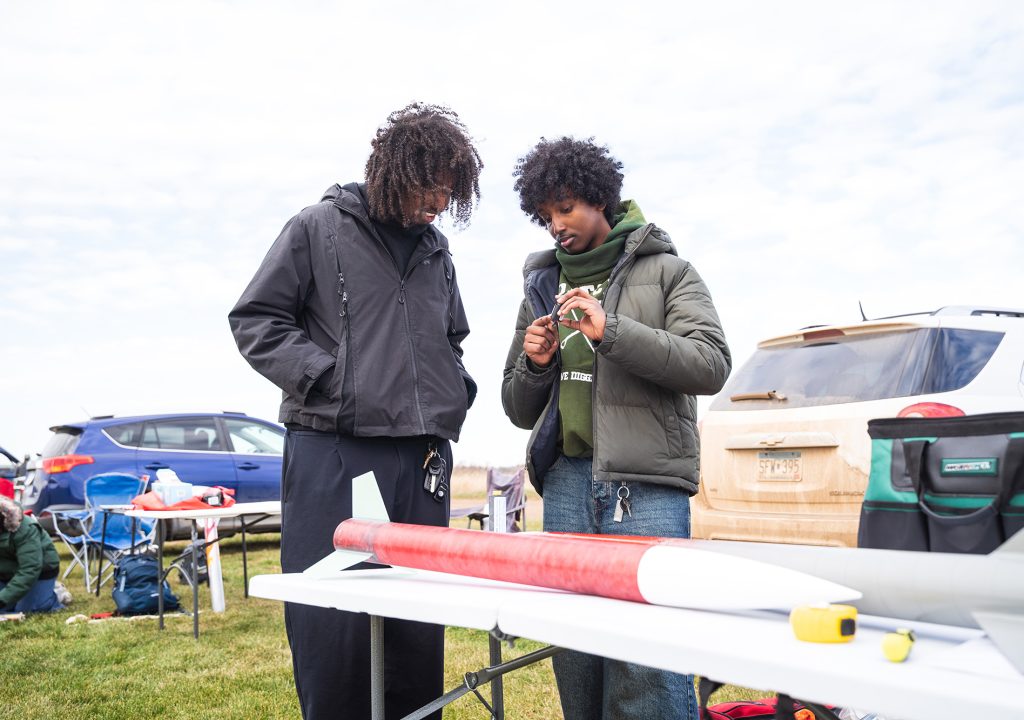
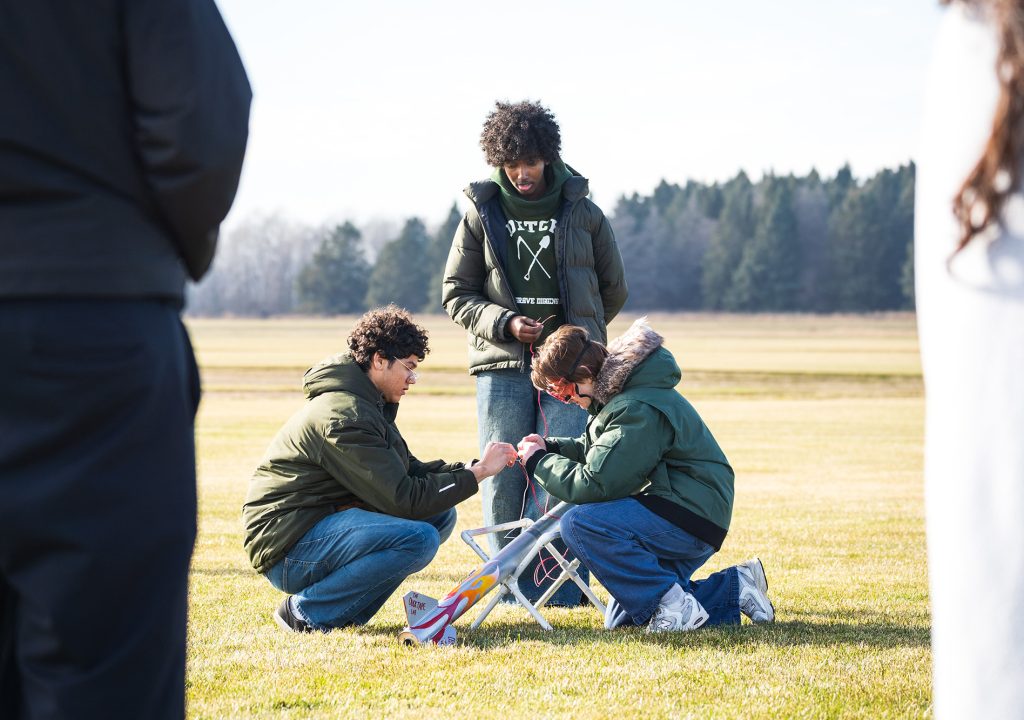
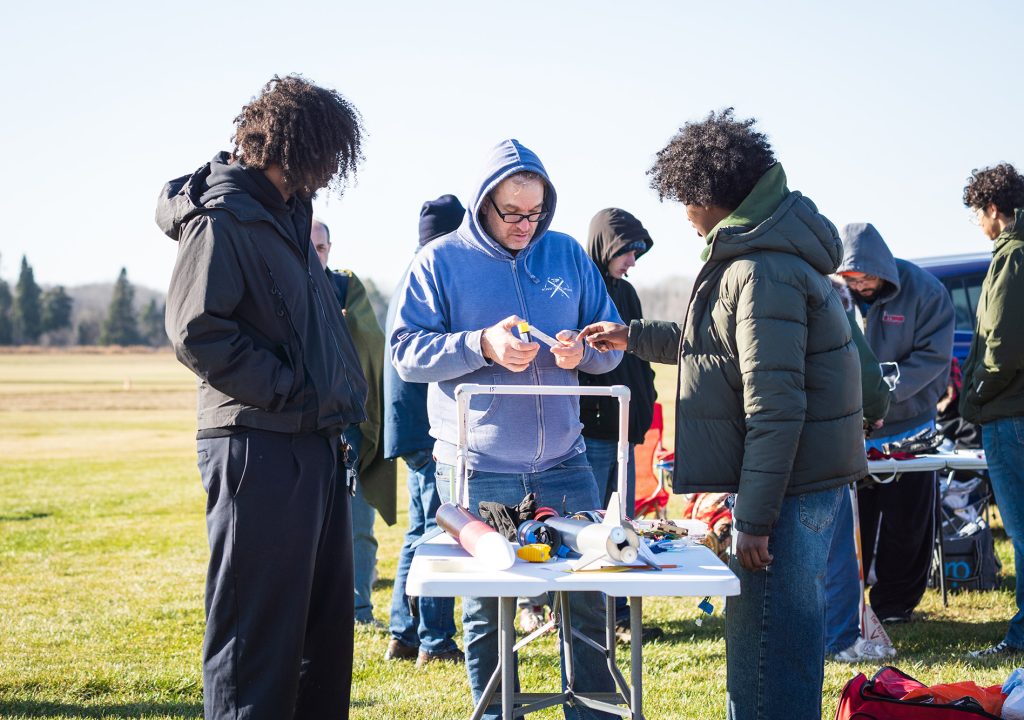
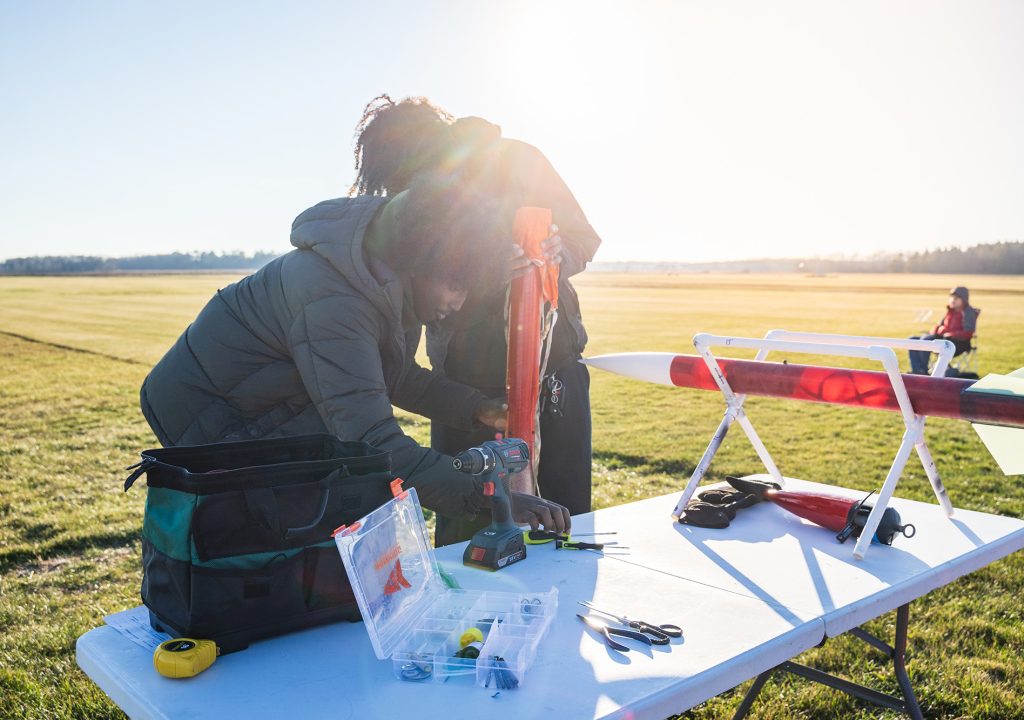
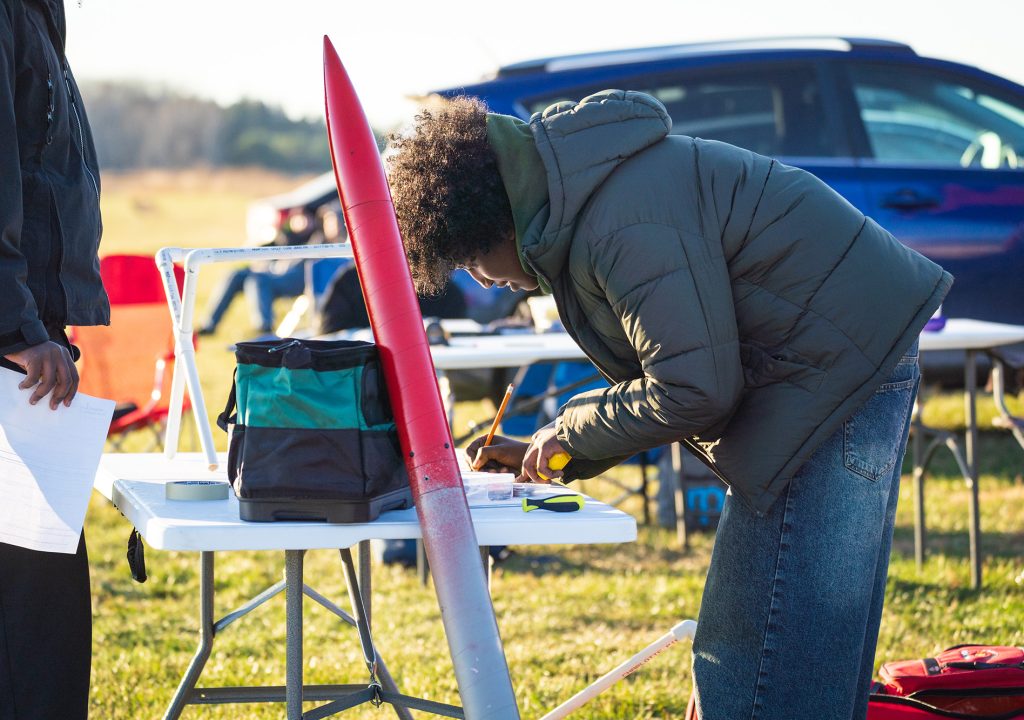
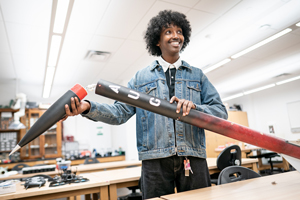
Students from Augsburg’s Rocket Club participated in a launch day in North Branch, Minnesota, in November 2025. (Photos by Hayley Selinski)
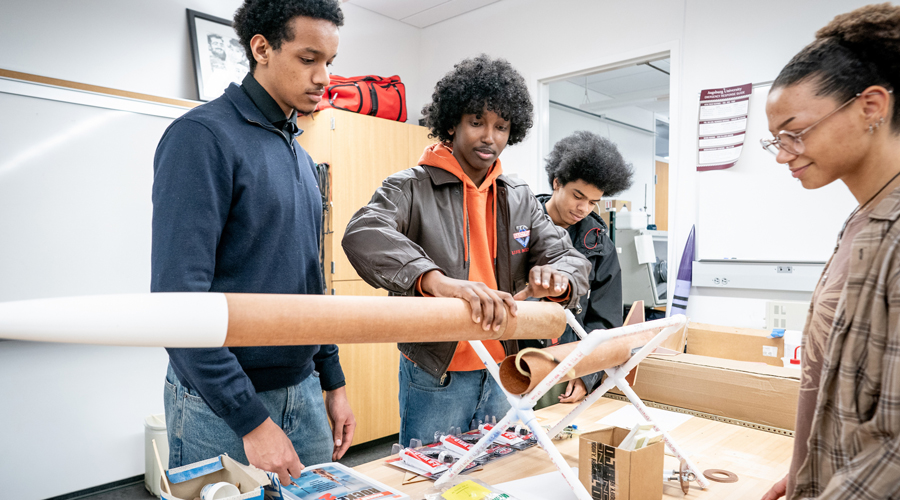
Top image: Mubarak Abdi ’27, center, works with other Augsburg students to construct a rocket as part of the Minnesota Space Grant Consortium’s Intercollegiate Rocketry Challenge. (Photo by Courtney Perry)
You Might Also Like
Embodying light and love as an LGBTQ changemaker
- on February 23, 2026
Embracing life as an Auggie
- on December 01, 2025