Healing the Earth, Healing Ourselves – Tending to the Soil We Share
By: Jerilyn Miller, Sr. Benefactor Relations Specialist
There was a moment during the Interfaith Symposium—Healing the Earth, Healing Ourselves—when the room grew still.
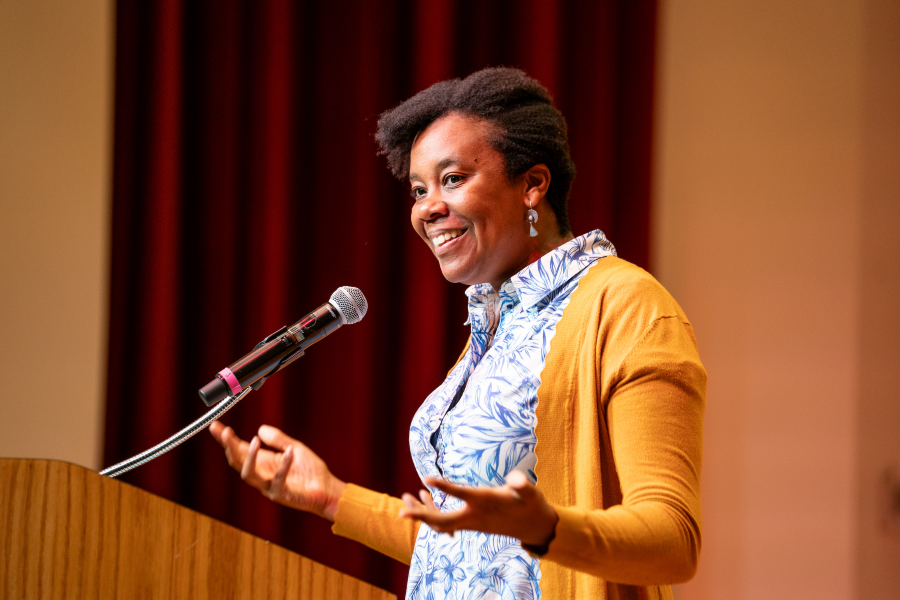 Rev. Jen Bailey, the keynote speaker, began with a story. She spoke about her grandmother, who worked the sugarcane fields of the American South in the 1930s and 40s, in the shadow of Jim Crow. Despite the violence and inequity around her, she cultivated dignity, community, and life from the land.
In that story was something deeper—the connection between soil and survival, between land and liberation.
Bailey named what many are already feeling. We are living, she said, in a time of “toxic soil.” Not only environmentally, but relationally and spiritually. The fractures we see—climate crisis, political division, loneliness, mistrust—are not isolated problems. They point to a deeper disconnection: from one another, from the earth, and from our shared humanity.
“This is not just a political crisis,” she said. “It is a relational crisis… a spiritual crisis.”
And yet, she did not leave the room in despair.
Instead, she offered another image: sunflowers.
Drawing on the concept of phytoremediation—plants that draw toxins out of the soil—Bailey described the slow, patient work of healing. Even damaged soil can be restored. Not quickly. Not easily. But through sustained care.
Healing, in this vision, is not a grand solution. It is a practice.
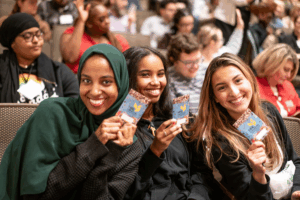
With native flower seed packets in hand, participants turned to one another—sharing ideas, hopes, and the ways they are already tending their communities. For Augsburg senior Zuko Buechler ‘26 an urban studies major, the conversation felt both personal and practical.
“I’m learning a lot about practices with the land and healing,” Buechler said. “It’s making me think about how I can plant these seeds at my grandmother’s [home] and share in her love of gardening —a connection that has shaped me.”
Bailey closed with a simple invitation: a daily discipline of choosing to plant something life-giving, even when there is no guarantee of what will grow.
Over lunch, the conversation continued—grounded in honesty about life experiences and resilience. Bex Klafter of Lutheran Social Services reflected on what stayed with her most:
“All land is good,” she said. “There is value—even when the soil needs to be amended.”
It is a simple idea, but one that shifts the frame. Healing does not begin with perfection. It begins with what is already here.
At Augsburg, that kind of work takes shape in real time—in conversations like these, in shared practices, and in a community willing to stay with what is difficult and choosing to tend to what is possible.