

Augsburg University Welcomes you to the 60th Annual Minnesota Undergraduate Psychology CONFERENCE (MUPC)
Featured Speakers
The question is no longer if AI will impact psychological science and related career pathways, but how it already is shaping research, practice, and students’ futures. As digital tools, AI-based assessments, and autonomous agents move from labs into everyday life, psychologists face new questions about evidence, ethics, and fairness when integrating AI into their work. For this year’s conference, our keynote panel (10:45am – 12:15pm, Hoversten Chapel, Foss Center) will feature short presentations from three experts whose work spans autonomous agents and robotics, computational models of perception and decision making, and AI in hiring and assessment, followed by a moderated panel discussion and Q&A on the implications of AI for psychological science, mental health, and the future of work.
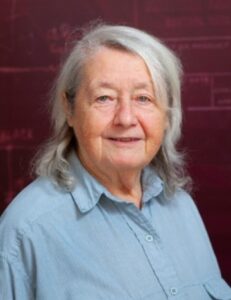
Maria Gini is a distinguished professor of computer science and engineering at the University of Minnesota whose work explores how AI-powered agents and robots make decisions in complex, real-world settings, from coordinating swarms of robots to guiding conversational assistants through human environments. She is also widely recognized for her mentoring of students in computing; in 2025, she received the Presidential Award for Excellence in Science, Mathematics and Engineering Mentoring from President Joe Biden, one of the highest national honors for STEM mentors.
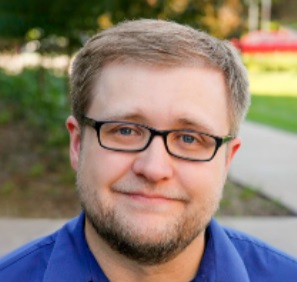
Richard Landers is a professor of industrial–organizational psychology at the University of Minnesota who examines how new technologies change the way people are hired, trained, and evaluated at work. He studies tools like game-based assessments, social media, virtual reality, and artificial intelligence to understand both their benefits and their risks. He also serves on an American Psychological Association advisory group on generative AI chatbots, helping the field think carefully about how AI should—and should not—be used to support people’s mental health.
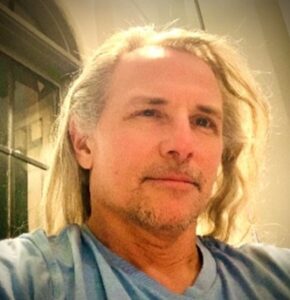
Paul Schrater is an associate professor in psychology and computer science at the University of Minnesota who studies how minds and machines make sense of the world. His work uses computational models to understand perception, decision making, and learning, asking questions like how people interpret uncertain information and how AI systems can do something similar. By comparing humans and algorithms, his research sheds light on both how we think and how intelligent systems should be designed.
Registration
All applications have now closed.
CLICK HERE FOR A PDF OF THE CONFERENCE SCHEDULE WITH POSTER AND PAPER PRESENTATION TIMES.
Note: Although we did our best to screen for typos in the form responses, the schedule may include small errors. We are unable to address all requests for corrections due to the volume of registrations.
Conference Schedule
- 8:30 am – 1:30 pm: Registration & Check-In
- Hagfors Center (HC) Lobby
- 9:00 am – 9:45 am:
- Poster Session 1: Hagfors 150
- Paper Session A: Hagfors 263
- 9:45 am – 10:30 am:
- Poster Session 2: Hagfors 150
- Paper Session B: Hagfors 263
- 10:45 am – 12:15 pm: Keynote Panel – Psychology and AI
- Hoversten Chapel, Foss Center (FC).
- 12:15 pm – 1:30 pm: Lunch
- Students may purchase lunch on campus (upper level Christensen Center) or at a restaurant in Cedar-Riverside.
- Faculty/Staff Lunch Meeting: East Commons, Christensen Center (CC)
- 1:30 pm – 2:15 pm:
- Poster Session 3: Hagfors 150
- Paper Session C: Hagfors 263
- 2:15 pm – 3:00 pm:
- Poster Session 4: Hagfors 150
- Paper Session D: Hagfors 263
Directions and Parking Information
Free parking will be available in Lots D and L from 8am – 5pm on the day of the event. You can find a detailed map of the campus here.
- All poster and paper sessions are held in the Hagfors Center (HC).
- The keynote panel will be held in the Hoversten Chapel of the Foss Center (FC)
- The faculty lunch will meet in the Marshall Room of the Christensen Center (CC).
FAQs
- When will MUPC 2026 be held?
- The conference will be held from Saturday, April 25th from 8:30am – 3:45pm.
- When will the full schedule and program be published on the website?
- The application will close approximately 2 weeks prior to the event to allow time to finalize the conference schedule. All students who submit by the deadline should plan on being accepted to present their research.
- The final program will be available in mid-April to confirm your presentation times. Additional presentation details will be sent to the primary presenter indicated for paper sessions.
- How do I prepare to submit my project information on the form?
- You will need to provide the project’s title as it will appear on your poster, and a 200-word abstract describing your project.
- Only one person — the Primary Presenter, or first author listed on the poster — needs to complete the form. A space is provided to provide the names of additional co-presenters.
- Who should I contact about updates to my presentation request?
- Students may email MUPC2026@augsburg.edu for questions about their presentation or necessary updates, including if you need to report that you will be unable to attend.
- Where can students find lunch on or near campus?
- Students may purchase lunch at the Christensen Center cafeteria, or within walking distance at a local restaurant in Cedar-Riverside.
- What’s the cost to attend the conference?
- The conference is FREE and is sponsored by Augsburg University.
- What should I wear to the conference?
- The basic standard for MUPC is business casual. If you are seeking examples, this article provides some ideas.
- How long should I plan to stay at the MUPC conference?
- In general, the expectation is that you should attend the entire conference, attending presentations and viewing the posters which you may find interesting as well as the Keynote address. Take advantage of this conference opportunity to explore the research of other students and network with people from across the field and state of Minnesota. At the very minimum, you need to be present for the entire poster session or presentation session in which you are scheduled.
- What can I expect of the conference environment?
- Poster sessions will be held in a large open gathering space, with approximately 40 student posters displayed at a time. Registered attendees circulate to ask questions of the poster presenters. Paper presentations are held in small classrooms that seat up to 30. We will have reserved sensory-friendly spaces to take a quiet break from the conference as needed.
- Where will MUPC be held in the future?
- The location for MUPC 2027 will be confirmed at the faculty lunch.