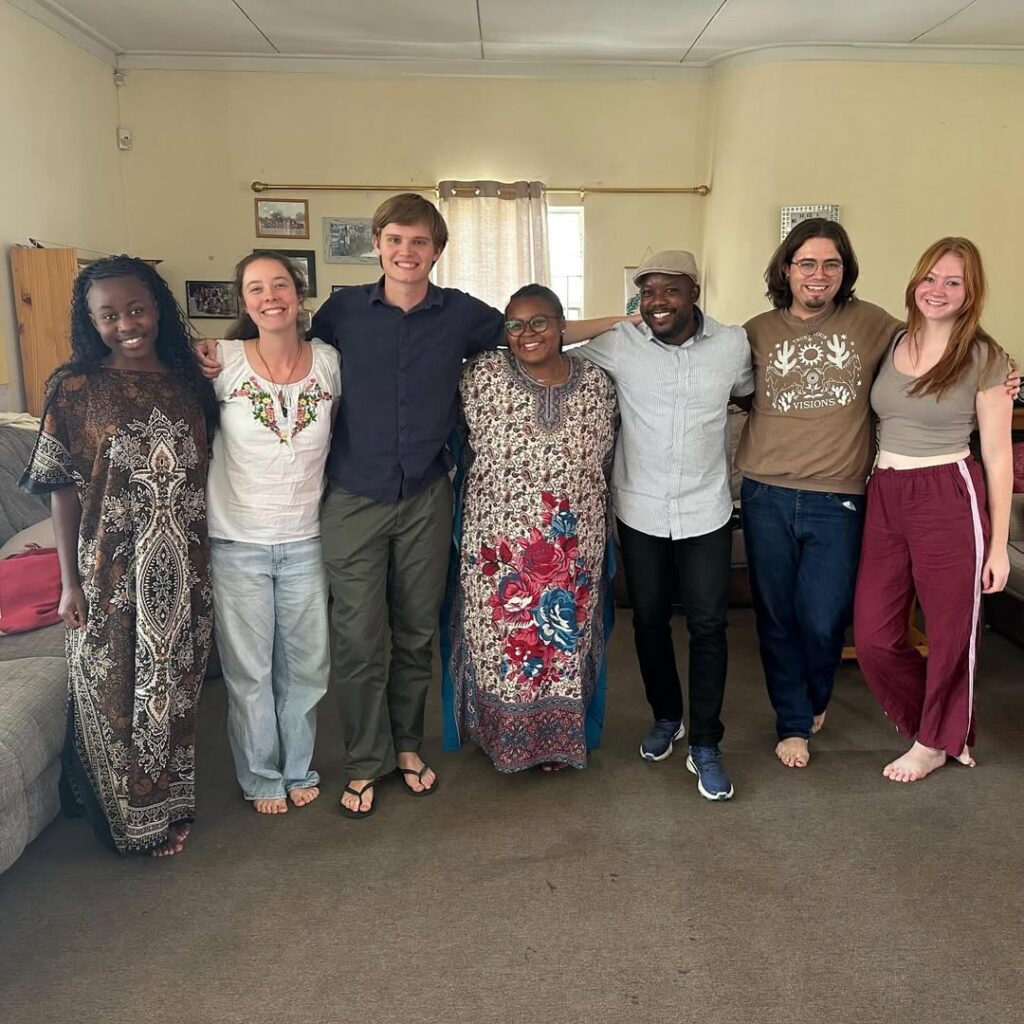
This is a guest blog post from our student social media ambassador, Ashley. Currently studying abroad on the semester program, “Decolonizing the Mind: Racial and Environmental Justice” in Namibia and South Africa.
Final Reflection
Participating in the Decolonizing the Mind: Racial and Environmental Justice Program has been one of the defining experiences of my life. I arrived unsure of what to expect, but intentional about taking full advantage of every opportunity, and I truly did. I’ve never experienced such rapid growth in myself academically, mentally, spiritually, and as a developing actor in the social-justice sphere. This program has been an almost uncannily perfect fit for who I am and who I’m becoming.
What made the program especially powerful was its well-roundedness. We engaged with people from a wide range of identities, ideologies, and lived experiences; some I liked more than others. But even in moments of disagreement, I found myself growing. The space for open dialogue allowed me to sharpen my thinking, challenge my assumptions, and recognize the value in perspectives that complicate my own. The staff also was crucial to fostering a productive and respectful dialogue. They always provided further insights, understanding, and let us form our own conclusions.
The experiential learning transformed the way I understand knowledge. Instead of memorizing facts I’d likely forget after an exam, which I now know is rooted in colonialism, I engaged directly with the people whose lives are intertwined with the histories we studied, and incorporated more indigenous knowledge systems. Meeting liberation fighters, lawyers, politicians, historians, and resilient survivors made the material feel real and urgent. Asking them questions helped me situate what we learned within my own context and pushed me intellectually far beyond what traditional academic spaces allow.
There was also a thoughtful balance between academic rigor and fun. The excursions weren’t just touristy explorations, they also gave our learning emotional texture, grounding the heaviness of the subject matter with shared experiences, laughter, and community.
This program confronted many of the assumptions I had absorbed from the colonial systems that shaped my upbringing. The two lessons struck the deepest: colonialism robs authenticity from everyone, and true commitment requires sacrifice, a question I now continually ask myself.
In this environment, I found space for genuine self-discovery, and for that, I am profoundly grateful.