- About 12% of our students are on SNAP, and the number is growing with new state enrollment eligibility changes – and their benefits are uncertain and unstable during the federal government shutdown.
- The Cupboard serves hundreds of Augsburg students per day (and growing year over year) with household staples, culturally appropriate and relevant foods, and hygiene products.
- A study in 2022 found that 69% of students at Augsburg, Hamline, and St. Kate’s experience food insecurity.
- While we receive state food dollars in support of our work, those dollars are waning in the wake of the pandemic and federal policy changes.
Sabo Center News
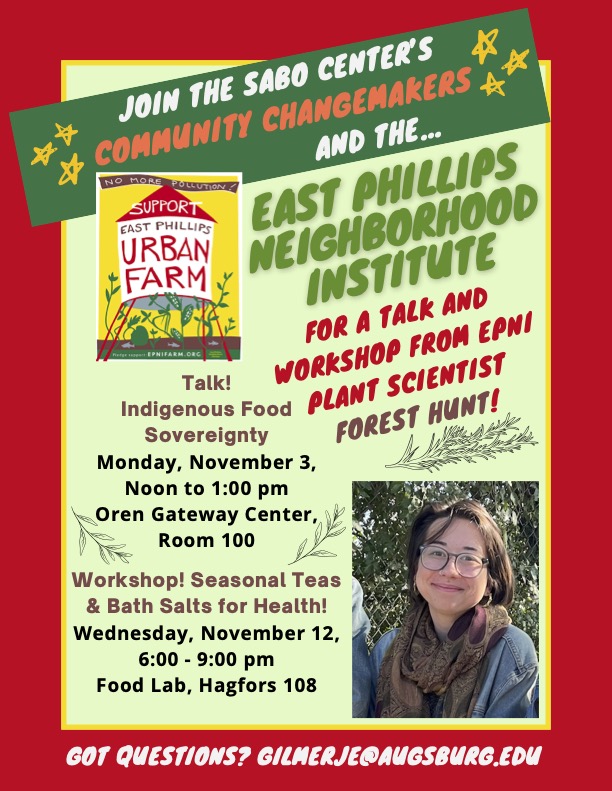
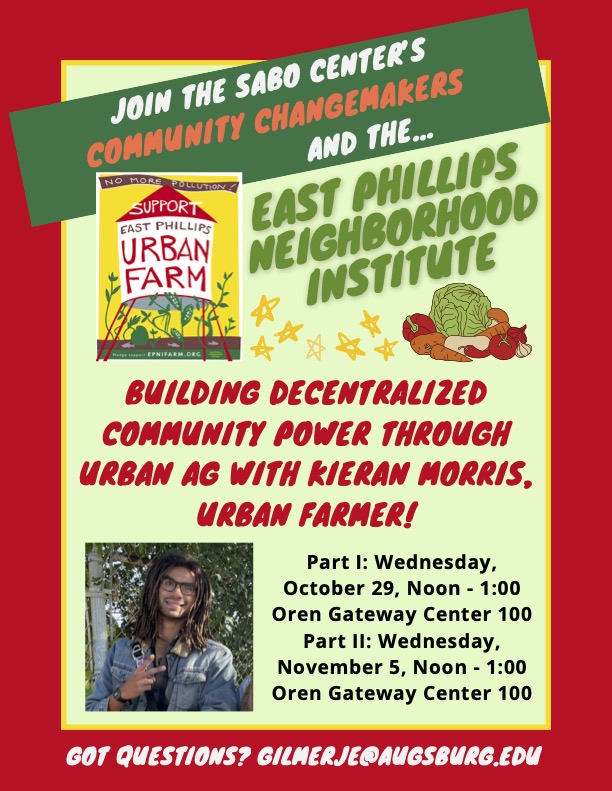
Community Changemakers: East Phillips Neighborhood Institute on Campus This Week!
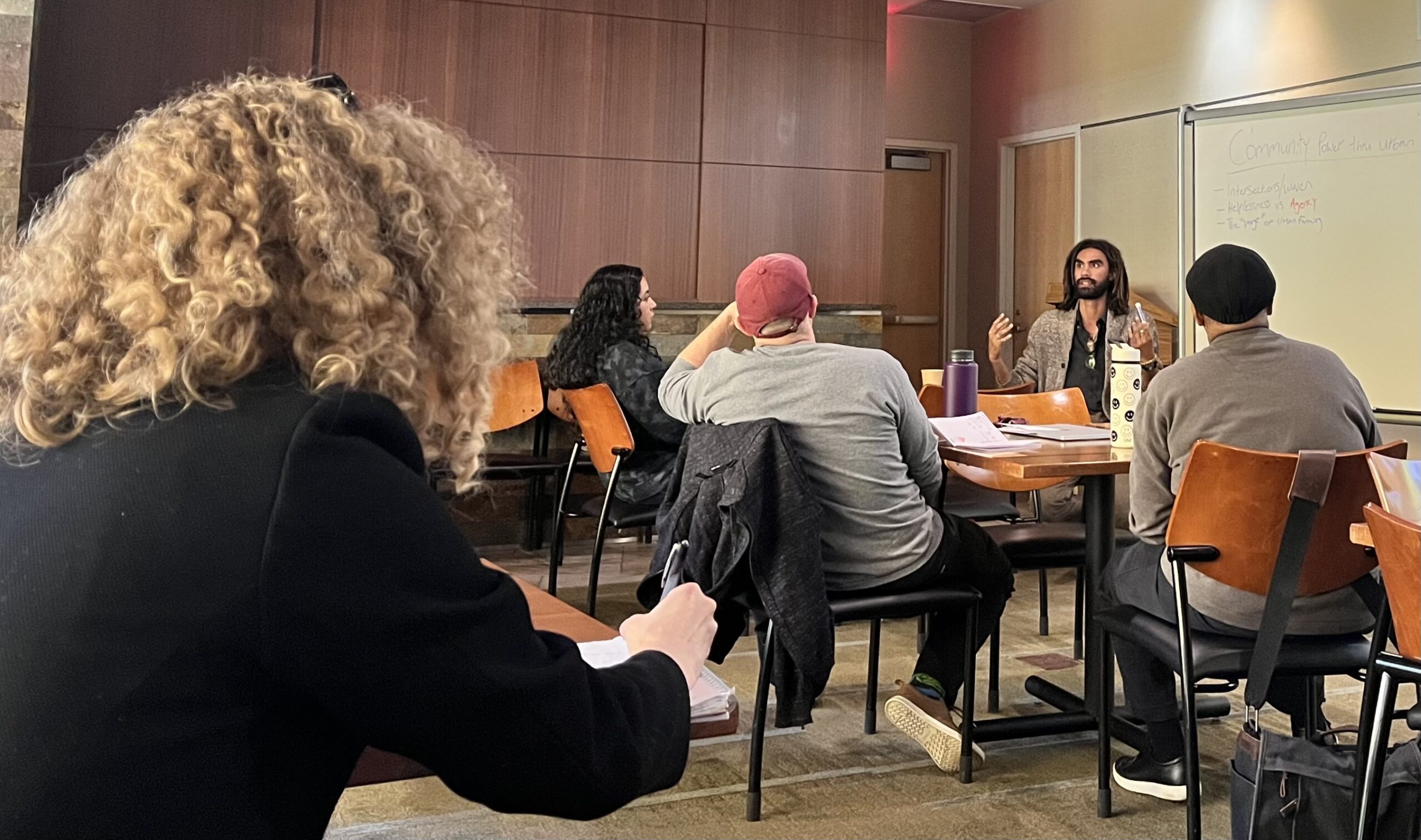
Join the Sabo Center Community Engagement Council’s Community Changemakers this week for a talk and workshop with Forest Hunt and part two of Kieran Morris’ talk on community power and urgan agriculture! Stay tuned to A-Mail and the Community Changemakers page for more information about upcoming events for Fall 2025! If you’re interested in learning more please email gilmerje@augsburg.edu.
Augsburg’s Katie Clark receives prestigious national award for community engaged practice

The Coalition of Urban and Metropolitan Universities (CUMU) awarded Professor Katie Clark (Chair, Nursing Department and Executive Director, Health Commons) with the prestigious 2025 Barbara A. Holland Scholar-Administrator Award. CUMU writes that “This award honors mid-career scholar-administrators who ground their leadership in research, shape ideas and actions within and beyond their institutions, and help universities serve as engines of social mobility and community well-being.” Katie could not be a better choice for this award! As an administrator of the Health Commons, Katie leads a a program embedded in multiple communities with the aim of creating community connections and advance health for all. Across 5 sites in the Twin Cities, the Health Commons has had over 150,000 visits and collaborated with more than 3,000 students. It is now a national model for experiential education in nursing, health professions, and more broadly.
At CUMU, Augsburg President Paul Pribbenow noted “Barbara Holland championed a vision of higher education leadership that was intellectually rigorous, publicly engaged, and community-accountable. Dr. Katie Clark lives out that vision every day.” He adds, “Katie exemplifies Augsburg’s commitment to the intersections of scholarship, service, and systems reform – and she does it all with the heart of a healer, building relationships and community wherever she shows up.”
The Sabo Center, through our Community Garden, Campus Kitchen, and Campus Cupboard, works in close collaboration with the Health Commons. We are inspired by, and learn from, Katie Clark’s work and vision. We are very excited to see her recognized nationally for her work and leadership.
Growing Through Practice: My Internship Journey at the Sabo Center
by Ethel Zidenga
When I first began my internship at the Sabo Center for Democracy and Citizenship, I wasn’t entirely sure what to expect. I knew I’d be challenged. I hoped I’d be changed. What I didn’t anticipate was how deeply this experience would shape not only my understanding of community engagement, but also my place within it.
One of the most transformative parts of this internship was the opportunity to explore the meaning of community engagement. I spent time researching how it is defined and practiced, and I quickly realized that true community engagement must be intentional. Whether it’s a partnership between an institution and a community, or among individuals, both sides need to be fully invested and both must receive equitable benefit. Just as importantly, both parties must have an equal voice in setting the goals and defining what success looks like.
Too often, institutions hold the upper hand in these relationships, directing the terms and outcomes. But if we are serious about creating anti-oppressive and anti-racist models of engagement, we must center the voices of marginalized communities. Their leadership, knowledge, and lived experiences must guide the work, not be tokenized or added on as an afterthought. This shift in power is not optional; it is essential.
During my time at the Sabo Center, I also had the opportunity to dive into powerful readings that pushed me further in my thinking. One that left a lasting impact was Hospicing Modernity by Vanessa Machado de Oliveira. I truly believe everyone should read this book. I only wish I had encountered it at the beginning of my MSW journey, but perhaps it wouldn’t have impacted me the way it just did. Sometimes the right book finds you when you’re ready.
In Hospicing Modernity, Vanessa challenges us to unlearn everything we’ve been taught by oppressive systems. She calls on us to recognize the harms embedded in modernity, systems that reward domination, extraction, and control, and instead be part of birthing something new. Her words awakened something in me: a deeper responsibility not just to question oppressive systems, but to actively participate in creating liberatory ones. She reminded me that being uncomfortable is necessary and that unlearning is a lifelong process.
I am also incredibly thankful for the mentorship and support I received from my field supervisor, Dr. Alex Fink, and my task supervisor, Ms. Jenean Gilmer. They created a brave and safe space where I could make mistakes, ask hard questions, cry when I needed to, and grow into a more critical and reflective practitioner. Their encouragement helped me find my voice and stay grounded, even when I was struggling to extend grace to myself. I will forever be grateful for the compassion, honesty, and guidance they offered throughout my internship.
Reflecting on this journey, I truly believe that the MSW program and the Sabo Center are a perfect partnership at Augsburg University. I may be biased, but the way both programs embrace holistic approaches to learning, justice, and community makes them a powerful team. The MSW program gave me the theoretical foundation, while the Sabo Center gave me a living, breathing classroom in the real world. Together, they shaped an experience that was not just educational but transformative.
As I close this chapter, I carry with me more than new skills. I carry a renewed sense of purpose and commitment. I will continue to unlearn, to listen, to act with intention, and to walk alongside others as we collectively build a more just and compassionate world.
Ethel Zidenga completed a Master of Social Work in Spring of 2025. She spent a year as an intern in the Sabo Center with Jenean Gilmer and Alex Fink, developing an extensive Community Partner Database, researching definitions and practices of community engagement, participating in relationship building and community development in the Cedar-Riverside Neighborhood. Her contributions are deeply appreciated and continue to provide meaningful support.
Minneapolis Mayoral Candidate Forum at Augsburg
Last week, the Sabo Center and Augsburg Day Student Government co-hosted a 2025 mayoral candidate forum for the city of Minneapolis. Nine candidates came to the forum, including several of the leading candidates. Student leader Aidan Wippich of the Day Student Government led and moderated the forum discussion, which included a number of questions relevant to the Augsburg community and the broader community of Minneapolis. Questions included things like In 2025, as stated by the Minneapolis crime dashboard, we have seen a 3% increase in assaults from years prior. How do you plan to address the issue of rising crime? and How do you plan to work with the city council to get things done?
In the audience, there were many students, staff and faculty from the Augsburg community in attendance who were interested in learning more about the candidates, especially given they have the opportunity to vote for several candidates with [ranked choice voting](https://vote.minneapolismn.gov/ranked-choice-voting/).
Whether or not you are voting in Minneapolis, election day is November 4, 2025. This is an Augsburg holiday, meaning there are no classes! If you are able to do so, there are many important elections this year. At the Sabo Center, we have resources to help you learn more about how and where to vote.
Fall Cooking Class in the Augsburg Community Garden with co-hosts Edible Boulevards and Ifrah Hashi
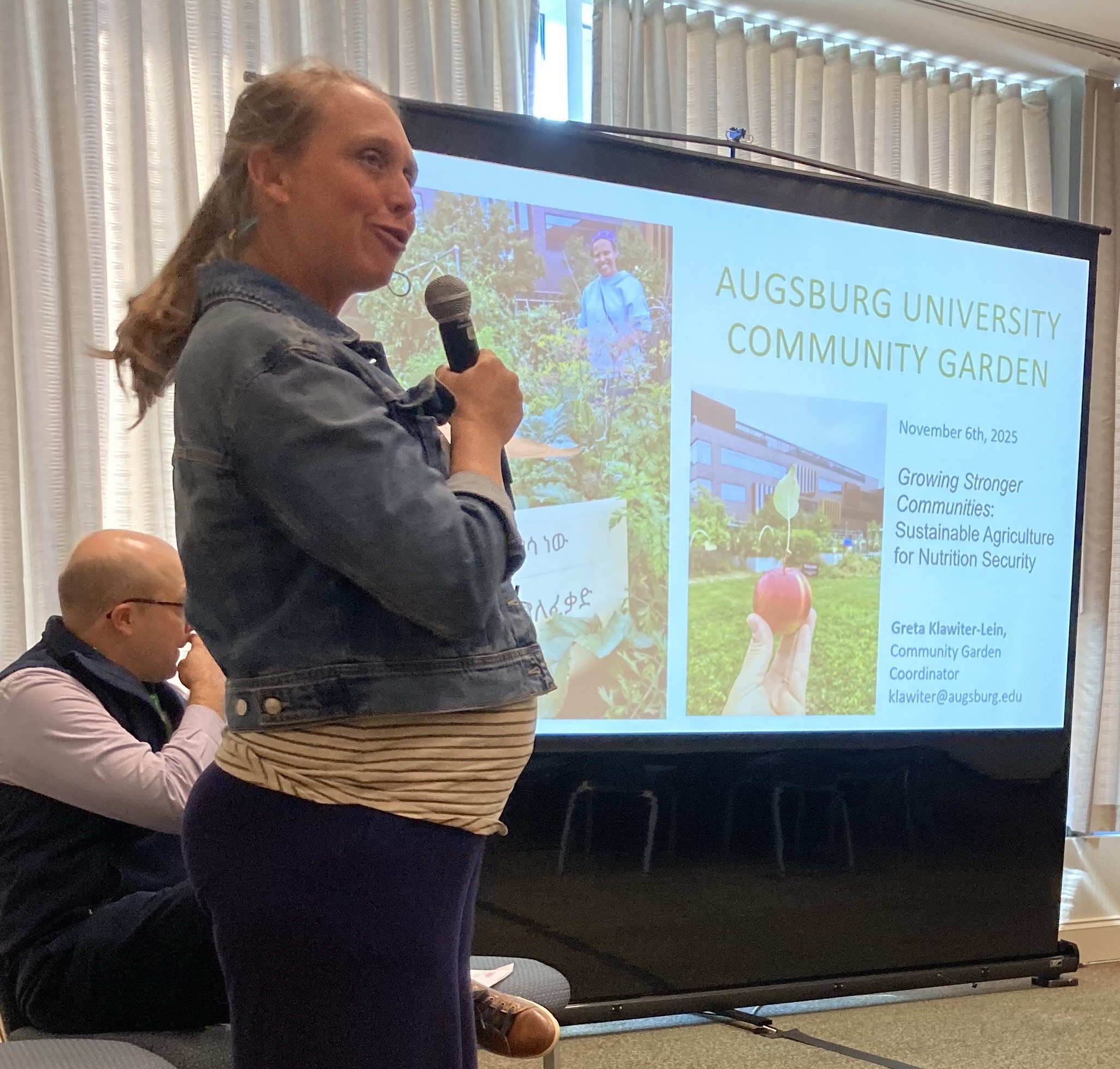
Author: Greta Klawiter-Lein, Community Garden Coordinator
Fall is the perfect time to harvest veggies. And as the weather cools, stews and soups are a wholesome way to utilize these garden goodies! This fall, the Augsburg Community garden got to play host for a super special plant-based cooking class. In collaboration with Edible Boulevards; a food initiative focusing on supporting Green Zone residents, and the amazing Ifrah Hashi, we saw how to turn a bountiful fall harvest into a warm, delicious meal. It was such a warm, cozy early afternoon full of good food, good people, and beautiful stories.
Ifrah walked us through how to make a vegan lentil stew that hit all the right fall notes—hearty, flavorful, and perfect for chilly evenings. While she chopped garden kale and peppers, she shared about growing up cooking and peeling potatoes with her Somali mom in London. Her stories were personal and heartfelt, and made the food feel even more meaningful and filling.
The class brought together a really lovely mix of people—gardeners, students, neighbors, and community members, all learning together. The room was relaxed and welcoming, and of course, there were door prizes of dried lentils and culinary spices!
Big shoutout to Edible Boulevards for the work they do helping people grow food right in their boulevard spaces, and for hosting monthly plant-based cooking classes that bring folks together around healthy, accessible meals. Every month is a different cooking class, in a different community garden with rotating hosts. While the location and chef might change, the meal prepared is always vegan and focuses on elements of the chef’s cultural heritage.
Events like this remind us why the Augsburg community garden exists in the first place—to connect, to learn, and to grow (literally and figuratively).
Spending Time in the Augsburg Community Garden
Author: Sophia, Augsburg Student and Garden Intern
My name is Sophia and I am officially in my last year at Augsburg! When I first started my internship in the community garden, I thought I was basically signing up for a chance to get my hands dirty and learn a few things about growing vegetables. What I didn’t expect was how much it would change the way I looked at food, people, and even myself. At first, tasks like weeding, watering, or picking up trash felt repetitive. But over time, those simple tasks became strangely grounding. There is something incredibly calming about focusing on the rhythm of nature, watching plants grow day by day and noticing details I would have ignored before, like the different shapes and colors of different leaves and how to identify them.
Working in the garden, I got to meet neighbors who came to tend to their personal plots, families who relied on the garden’s harvest, and other students wanting to learn. These interactions slowly taught me what community really means, sharing knowledge, food, and connection. I remember helping an older gardener one afternoon as she explained how the seeds she brought came from her home country, and listening to her stories made me realize how much history and identity can be held in something as small as a seed.
The garden is a constant reminder that growth takes time, care, and effort, and sometimes setbacks are just part of the process. Watching plants bounce back after a storm reminded me that resilience is built slowly, and often in the most ordinary moments. Those little challenges taught me patience and persistence, especially when plants were harvested without permission or if the bunnies got to them.
Coming to the end of my internship, I realized that what I have gained went far beyond the skills of gardening. The garden gave me a deeper respect for the work it takes to bring food to the table, a stronger appreciation for the people who make up my community, and a sense of responsibility to live in a more sustainable, mindful way. Most of all, it taught me how interconnected we all are, that the health of the soil, the strength of our neighborhoods, and even our own well-being are tied together. I now have a feeling that I was part of something bigger, something rooted in care and growth.
Celebrating Culture, Community, and Connection in Cedar Riverside
Author: Steve Peacock, Augsburg Director of Community Relations
I look forward to the Cedar Riverside Multicultural Dinner that is held annually at the Brian Coyle Center. It is an amazing gathering of people from all corners of the neighborhood who come together to share a meal, enjoy cultural performances, and build community. The Multicultural Dinner combines so many things that I love about the Cedar Riverside neighborhood – hospitality, kindness, generosity and diversity all combined together with a dose of controlled chaos!
This year’s event, held on September 18th , was no exception. Despite intermittent rain that disrupted plans to hold the dinner outside in Currie Park, over 400 people attended. They were greeted in the gym of the Brian Coyle Center by a long line of tables filled with food provided by local restaurants. Wonderful aromas and voices in many different languages filled the air. Volunteers, including Augsburg staff and students, stood ready to greet guests and dish out generous portions. People shuttled inside and out as the weather changed. As the rain came, volunteers hurriedly set up chairs in the gym and then dried off tables and chairs outside when the rain stopped. Folks mixed together as they ate and talked. They enjoyed performances including Oromo, Somali, and Native American dance troupes. My favorite performance of the evening was the choir of Korean elders (average age of 87!). The evening ended with a traditional Somali line dance, led by youth from the Coyle Center, with lots of others joining in. What an evening in Cedar Riverside!
Korean Elders Choir performing at the Multicultural Dinner

Volunteers serving the Multicultural Dinner (including Augsburg staff and students!)

More Than a Garden: Growing Community at Augsburg
Author: Greta Klawiter-Lein, Community Garden Coordinator
Tucked just behind the Hagfors Center, the Augsburg Community Garden is one of the most vibrant spaces on campus. Although it’s hard to miss the big garden there, you might not know what the intention is behind that space. It’s not just a garden, but a gathering place where community, learning, and food all come together.
The garden is made up of 64 individual plots, most of which are tended by neighbors from the surrounding Cedar-Riverside community. A few Augsburg alumni, faculty, and staff garden here too, but the majority of our growers are local residents who bring incredible knowledge, skill, and dedication to their personal plots. Augsburg provides this community of gardeners with many resources such as land, soil, seeds, plants, water and a hired gardener coordinator that manages communication, resources and facilitates events among other things. By lowering the barrier to access and having sustainable, healthy food practices right here in the city, this space is helping folks who do not have land to grow food and offering them an outdoor space to call their own.
About half of the plots are in-ground and the other above-ground plots are for supporting disabled persons and elderly gardeners. The gardeners here love this space; not just for the dark leafy greens and tomatoes they can grow, but also as a welcoming nature-space that they often end their evenings at. While you will see many zucchinis in this garden, you’ll also see vegetables you won’t always find at the grocery store, crops that are culturally significant and important to their families and food traditions such as anchote or epazote.
Walk through the garden on a summer day and you might hear five or more languages being spoken. English isn’t even the most common! You’ll hear Somali, Oromo, Amharic, Arabic, Spanish and others. On any given day you might catch some children playing hide and seek behind the tall corn, friends praying together, families collecting tomatillos for a shared meal, and friends connecting across rows of kale, tomatoes, and okra.
While each gardener manages their own plot, the space is open and welcoming. Apples and raspberries grow along the edges of the garden, and anyone walking by is welcome to harvest and enjoy them. All events that happen in the garden are also open to the public. If you ever meet a gardener, you will most certainly be gifted something from their plot; a prized fruit of labor and love.
But the garden isn’t just about food. It’s about beautifying our neighborhood, making space for experiential education, and creating opportunities for people to learn and grow together. From students curious about sustainability to families who’ve gardened for generations, everyone brings something valuable to this space.
Whether you’re a prospective student, a neighbor, or just someone who loves green spaces, the Augsburg Community Garden is a reminder of how much we can grow together.
September 17th is Constitution Day!
HAPPY CONSTITUTION DAY!
Constitution Day is an American federal observance that recognizes the adoption of the United States Constitution and those who have become U.S. citizens. It is celebrated on September 17, the day the U.S. Constitutional Convention signed the Constitution in 1787 in Philadelphia.
Make a plan to vote on November 4.
This year local elections will be held on November 4 and Augsburg has made election day a holiday during which classes are canceled so that all eligible voters have time to vote. The office of the Minnesota Secretary of State has sample ballots and information about voting. If you have questions feel free to reach out to the Sabo Center staff, we’d love to help.