
bing pixel

The Sverdrup Visiting Scientist Program Events

Grounded in Nature: What’s Soil Got to Do With Climate Change?

Convocation Lecture

April 22, 2026, 12 p.m.—Hoversten Chapel

The soil system stores twice as much carbon as the atmosphere and all the world’s vegetation combined. The exchange of greenhouse gases between the soil and the atmosphere controls the composition of the earth’s climate. Over the last two centuries, human actions have increased the flux of greenhouse gases from soil to the atmosphere. Recent studies highlight soil management’s role in reversing the increasing concentrations of greenhouses in the atmosphere by implementing climate-smart land management practices. This presentation will discuss the fundamental mechanisms by which the soil system controls the earth’s climate and the potential of different land management practices to bend the curve of increasing concentrations of greenhouse gases in the atmosphere.

In addition, Dr. Berhe will discuss her career trajectory from being a professor to leading one of the largest science funding agencies in the nation, infusing the perspective of an earth system scientist into science policy.

Precipitation Shifts and Carbon Response: Soil Carbon Dynamics Under Climate Change.

Technical Talk

April 21, 2026, 4:30 p.m. —Sateren Auditorium

Climate change is causing major shifts in precipitation patterns globally. Across a variety of ecosystems, the changes in precipitation patterns are observed as increased or decreased amounts of precipitation, shifts in the type of precipitation, changes in the timing of precipitation, more frequent extreme events, and more. How these shifts in precipitation patterns affect the soil system’s ability to sequester atmospheric carbon dioxide and store and stabilize organic matter varies as a function of a host of soil and ecosystem properties. Using insights derived from a combination of short- and long-term rainfall simulation experiments and field observation studies across California, plus theoretical work, this talk will discuss the effect of changes in the amount and timing of precipitation on fluxes, stocks, composition, and stabilization mechanism of soil carbon.

BIOGRAPHY

A female scientist in a white lab coat smiles while sitting at a laboratory bench next to a row of tall cylinders filled with various soil and liquid samples. High shelves with lab supplies and equipment are visible in the background.The Honorable Dr. Asmeret Asefaw Berhe is a professor of soil biogeochemistry and the Falasco Chair at the University of California, Merced. She previously served as director of the United States Department of Energy’s Office of Science (a Senate-confirmed, presidential nomination) and associate dean for graduate education at UC Merced. Her research bridges the disciplines of soil science, geochemistry, global change science, and political ecology. Her research aims to improve our understanding of the soil system’s role in regulating the Earth’s climate; how soil carbon and nutrient cycles respond to environmental changes, including climate change, land-use changes, erosion, and wildfires; and the dynamic two-way relationship between soil and human communities. She holds the distinction of being an elected member of the United States National Academy of Engineering, a fellow of both the American Geophysical Union and the Geological Society of America, and recipient of many other awards and honors.


Sponsored by the General Leif J. Sverdrup Visiting Scientist Program and the Minnesota NASA Space Grant Consortium at Augsburg University.
Sverdrup Visiting Scientist Program

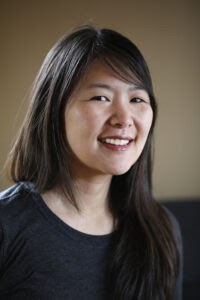
Janet Iwasa, PhD, is an Assistant Professor in the Biochemistry Department at the University of Utah, where she serves as director of the Genetic Science Learning Center. Her broad goal is to create accurate and compelling molecular and cellular visualizations that will support research, learning and scientific communication. Janet’s award-winning illustrations and animations have appeared in scientific journals including Nature, Science and Cell, as well as in the New York Times. Her work has also been featured on television and in museum exhibits. Janet was named a 2014 TED fellow and recognized as one of the “100 Leading Global Thinkers” of 2014 by Foreign Policy magazine and one of the “100 Most Creative People” of 2012 by Fast Company magazine. More recently, she was selected by the RCSB Protein Data Bank to become lead author for the “Molecule of the Month” monthly report. As a postdoctoral fellow, she created a multimedia exhibit with Nobel Laureate Jack Szostak (Harvard University) and the Museum of Science, Boston, and later worked on biological visualizations as a faculty member at Harvard Medical School. She received her Ph.D. in 2006 from the University of California, San Francisco for her work on the actin cytoskeleton in the laboratory of Dyche Mullins, and completed 3D animation training at the Gnomon School of Visual Effects later that same summer.

Schedule of Events:

“Visualizing Tiny Worlds ”

Convocation Lecture

April 15, 2025, 11 a.m.—Hoversten Chapel

Life as we know it relies on the constant and tireless work of tiny molecular machines that are too small to observe directly. Janet Iwasa’s work focuses on creating animations and illustrations of how these machines are hypothesized to operate based on data collected by the biological community

“Animating Molecular Machines ”

Technical Talk

April 15, 2025, 5 p.m. —Hagfors 150

In recent years, there has been a rapid growth in the use of animation as a means to communicate complex biological processes to a wide range of audiences. Using 3D animation software from the entertainment industry, it is possible to synthesize data from diverse sources to create a coherent and contextualized view of how molecular and cellular systems operate. These visualizations have served not only to make molecular concepts more accessible to students and the public, but have also proven to be extremely useful for researchers seeking to build and refine their hypotheses. In this talk, Janet Iwasa will describe her career path and current projects that focus on using animation and creating new tools for research and outreach.

Sponsored by the General Leif J. Sverdrup Visiting Scientist Program and the Minnesota NASA Space Grant Consortium at Augsburg University.

Registration is now open!

PRISM scholars and mentors at Century, Normandale, and Minneapolis College, and you are invited to attend no registration needed. Please email Dr. Jennifer Brookins-King, brookinj@augsburg.edu, if you plan to attend to receive parking information and to greet you for the event.

Bill Nye ‘The Science Guy’ to speak at Augsburg for Valentine’s Day

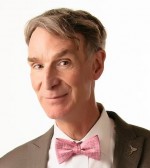
Bill Nye


Bill Nye “The Science Guy” will share his love for science when he speaks February 14 at Augsburg College’s Scholarship Weekend in an address that is open to the general public. Nye, who will talk about “How Science Can Save the World,” will speak with academic depth and humor about planetary science, climate change, evolution, environmental awareness, and more.

“We’re excited to host Bill Nye during our Scholarship Weekend when bright students from across the United States visit campus to compete for our top academic scholarships,” said Augsburg College President Paul Pribbenow. “We want to give these scholarly, prospective Auggies the chance to grapple with some of the world’s deepest questions so they can experience what Auggies are called to do each and every day.”

During the 2014 Scholarship Weekend, nearly 100 students and the public had the opportunity to be challenged by deep questions of compassion and humanity posed in a talk by His Holiness the 14th Dalai Lama.

Nye, a mechanical engineer and seven-time Emmy Award winner as host and head writer of “Bill Nye the Science Guy,” will speak from 11:30 a.m. -12:30 p.m., Feb. 14, in Augsburg College’s Si Melby Gymnasium.

Ticket Information: Ticket information will be made available as soon it is finalized. Members of the Augsburg College community will have the opportunity to purchase tickets during a presale and that will be announced via A-mail as soon as details are available. Following the presale, tickets will be made available to the general public.

Biography: Bill Nye is a mechanical engineer who wants the world to know and appreciate the passion, beauty, and joy (the P, B & J) of science. Nye’s show, Bill Nye The Science Guy, has garnered 18 Emmy awards. Nye won seven of them as host and head writer. These days, Nye travels the globe exhorting audiences to change the world. He has a day job as the CEO of The Planetary Society, the world’s largest non-governmental space interest organization. Nye’s newest book, “Undeniable: Evolution and the Science of Creation,” is slated for release in November.