
Curious about the experience of Auggies who have been involved in theological exploration of vocation? The summer 2014 Augsburg Now magazine features an article about previous Christensen and Interfaith Scholars, Faithful and Relevant.

Bernhard Christensen Center for Vocation
Memorial Hall 233612-330-1202ccv@augsburg.edu
Curious about the experience of Auggies who have been involved in theological exploration of vocation? The summer 2014 Augsburg Now magazine features an article about previous Christensen and Interfaith Scholars, Faithful and Relevant.
“Devoutly Would He Teach: The Legacy of Bernhard M. Christensen,” Gracia Grindal, ’65, professor of rhetoric at Luther Seminary, Bernhard M. Christensen Symposium keynote address on Oct. 2, 2010
Reflections on the 5 Lessons of Bernhard M. Christensen from the spring 2010 issue of Till & Keep journal.
Martha E. Stortz, the Bernhard M. Christensen Professor in Religion and Vocation, has a blog with her colleagues about pilgrimage.
Continue reading “Resources on Vocation: Blogs, Chapel Talks, and More! 2010-2014”
On January 28, 2015, Martha E. Stortz’s chapel talk at Augsburg College connected current events of Charlie Hebdo and Ferguson with the naming that Jesus does in the Sermon on the Mount: Light. Salt.
Her timely reflection is available electronically – What’s In a Name?
Martha E. Stortz (Bernhard M. Christensen Professor of Religion and Vocation) and Jack Fortin (CCV Senior Fellow) work with the Collegeville Institute for Ecumenical and Cultural Research on special vocation-related programs.
The Collegeville Institute has created a helpful video resource for personal and/or small group reflections. “Vocation is the story of our lives: how God calls and how we respond. Lives Explored is a video narrative project started in 2012 to capture stories of vocation from participants in the Called to Life and Called to Work programs.”
View the Lives Explored videos and enjoy these everyday examples of vocation in people’s life and work.
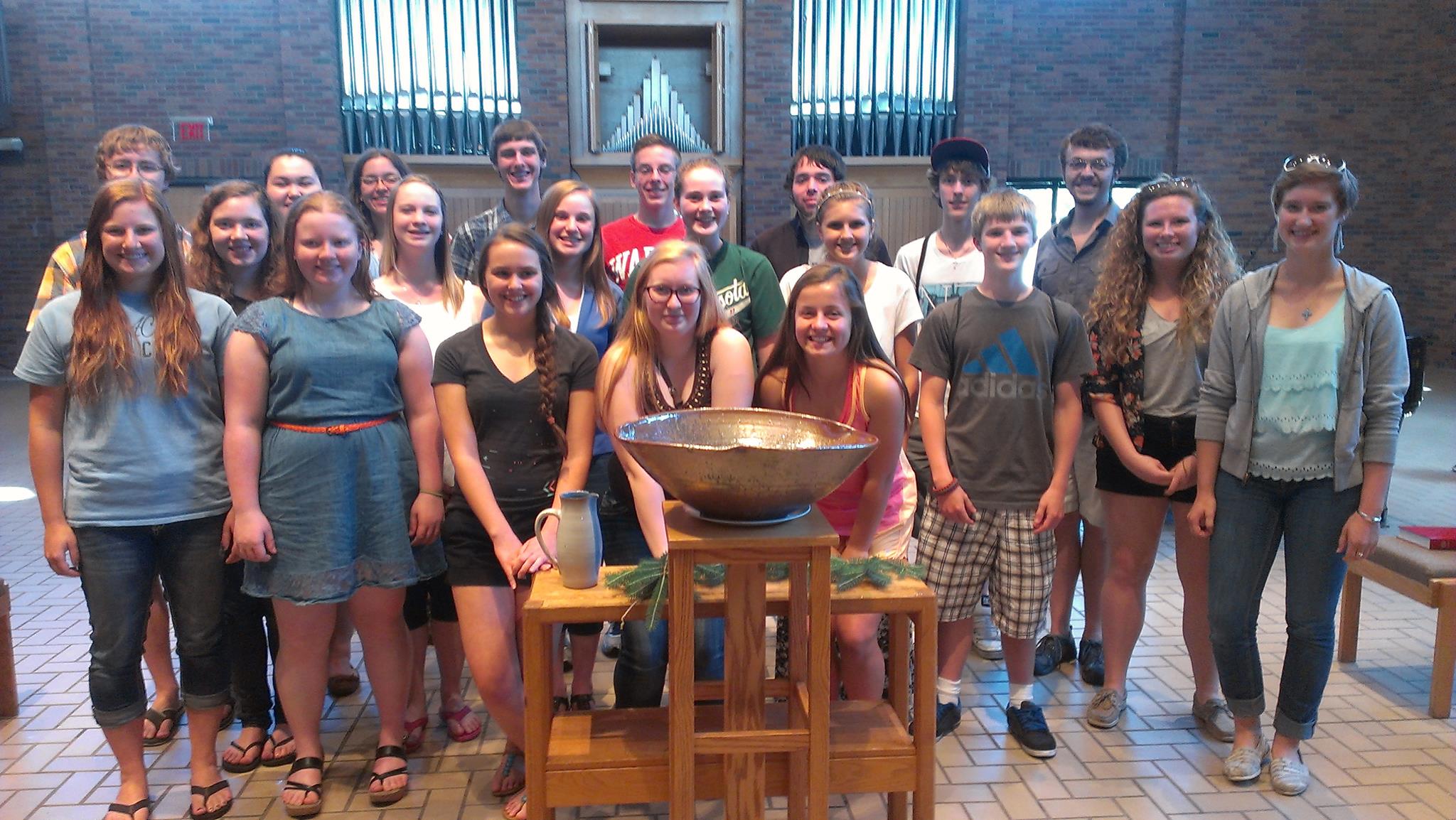
This year’s ACYTI was an intense week of friendship, classroom learning, worship, solitude, contemplation, discernment, and action on Augsburg’s urban campus for high school students from around the country interested in theology.
Students participated in hands on learning with classroom discussion both at Augsburg and sites throughout the Twin Cities. At the end of their week-long journey they reflected on what they took away from the week and wrote an essay.
This year’s theme was OMC! Christian Community in the Internet Age and focused on the impact of technology on the Christian Community. Take some time and read what current high school students are learning from Augsburg’s intellectual and diverse community experience!
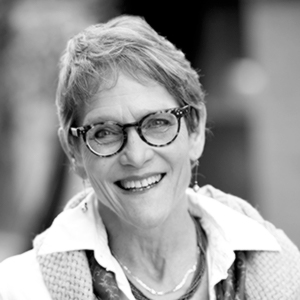 Augsburg College hosted Seminary and Divinity School Day on October 28. This event allows regional college students to connect, reflect, and explore theological graduate study options with representatives from 18 top-notch seminaries and divinity schools.
Martha E. Stortz, Bernhard M. Christensen Professor of Religion and Vocation, gave the keynote address at the event.
Her message includes several Big Questions for reflection, and is available electronically – Vocation as Path: Following the Questions
The Interfaith Scholars are a group of students who are interested in exploring the religious diversity of the Augsburg student body, the wider Twin Cities community, and the United States through inter-religious dialogue and action. Students from a variety of traditions as well as the non-religious are invited to apply in order to converse respectfully with others about what they believe, why it matters, and how it propels us to service in the world. Once selected, the cohort has both academic and service requirements for an entire academic year.
Interested in learning more? See below.
Some examples of past Interfaith projects
2012-2013 Interfaith Scholars Facebook photo book
2010-2011 Interfaith Scholar Cohort Video
The Interfaith Scholars Program is a collaboration between the Christensen Center for Vocation (CCV), Campus Ministry and the Religion Department.
Jeanne Boeh is a professor of Economics at Augsburg University
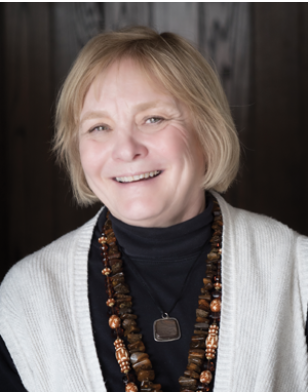 As some of you may know and some of you may even care; Adam Smith, the father of economics, is buried in Edinburgh. One of PBS’s well known and admired hosts is the travel author Rick Steve’s. I was aghast to read his explication of how to find Adam Smith’s grave in Edinburgh.
People’s Story-This interesting exhibition traces the conditions of the working class through the 18th, 19th and 20th centuries. Curiously, while this museum is dedicated to the proletariat, immediately around the back (embedded in the wall of the museum is the tomb of Adam Smith-the author of Wealth of Nations and the father of modern free market capitalism(1723-1790). [i]
Continue reading “This I Believe, February 2014: Jeanne Boeh”
Melissa A. Hensley is an assistant professor in the Social Work department.
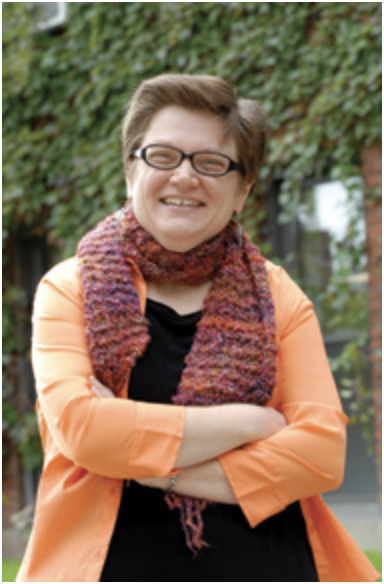 I lead a monthly “Empowerment Workshop” at a mental health agency in a nearby county. The people who attend the group choose the topic for discussion each month, focusing on self-care, wellness, and recovery from serious mental illness.
Recently, I was facilitating a discussion on building self-esteem. The group members and I were discussing a worksheet that we’d all completed. The worksheet asked us to list positive qualities we possessed, compliments we’d received recently, and challenges that we had overcome. As we were taking turns sharing our responses, the conversation came around to a middle-aged woman seated at the back of the conference room. She stated that she could not think of anything good about herself. I was surprised at first, but I tried to respond in an encouraging way.
Continue reading “This I Believe, December 2013: Melissa Hensley”
The annual Christensen Symposium-first held in 1990-is made possible through the Christensen Endowment, which was established by alumni and friends of Augsburg to honor Bernhard M. Christensen. As the president of Augsburg College and Seminary from 1938 to 1962, Christensen was a central figure in drawing Augsburg fully into the study of the liberal arts.
The Symposium is designed to reflect and reinforce the principles to which Christensen showed such deep commitment: academic integrity, the Christian Gospel, and a mutually supportive relationship with the church. In addition, it serves as a vehicle for the Augsburg community to explore and apply the five lessons that are Christensen’s legacy: