 We are excited to introduce our new continuing education series, which expands on the Seeing Things Whole framework by empowering you with the tools and insights needed to tackle challenges, make informed decisions, foster collaboration, and drive meaningful change. Join us as you become a more mindful and effective leader!
Overview
The series consists of five interactive workshops, each aimed at enhancing your ability to lead mindfully through change for more holistic outcomes. The workshops cover the following over five weeks:
| Date | Topic |
| Tuesday, Oct 22 | Articulating Your Challenge |
| Tuesday, Oct 29 | Types of Knowledge: Accessing Your Inner Wisdom |
| Tuesday, Nov 12 | The Coin Flip Model of Responsible Decision-Making |
| Tuesday, Nov 19 | Communication, Clarity, and Collaboration |
| Tuesday, Nov 26th | Mindful Implementation and Change |
*** All Sessions are Online, last 90 minutes, and start at 12:00 pm CST
Register to attend all sessions for $100.
You Will Learn
Throughout these workshops, you will work both individually and collectively to make progress on a leadership opportunity. Here’s what you can expect to gain:
- Articulate Your Challenge: Identify the core of an organizational opportunity through structured inquiry while analyzing your beliefs to determine your core values.
- Understand Types of Knowledge: Differentiate between distinct ways of knowing and practice tapping into your inner wisdom through guided visualization.
- Take a New Approach to Decision-Making: Utilize the coin-flip model to honor the emotional aspects of decisions while analyzing and comparing potential outcomes.
- Plan Your Communication to Maximize Engagement: Define effective communication and recognize the importance of engaging team members by seeking clarity.
- Create Mindful Implementation for Change: Evaluate and propose implementation plans for organizational opportunities based on your decisions.
Workshops are Facilitated by Elaine Eschenbacher
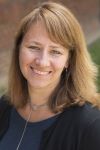 Elaine is a writer, researcher, facilitator, and coach. Formerly Augsburg’s Assistant Provost for Experiential Learning and Meaningful Work, she launched Unleashed Azalea in 2024 where she offers coaching on leadership and creativity, and works with organizations on workshop design, facilitation, research and writing. She teaches Community Engaged Leadership courses with the Masters of Leadership program at Augsburg University and holds an MA in Organizational Leadership.


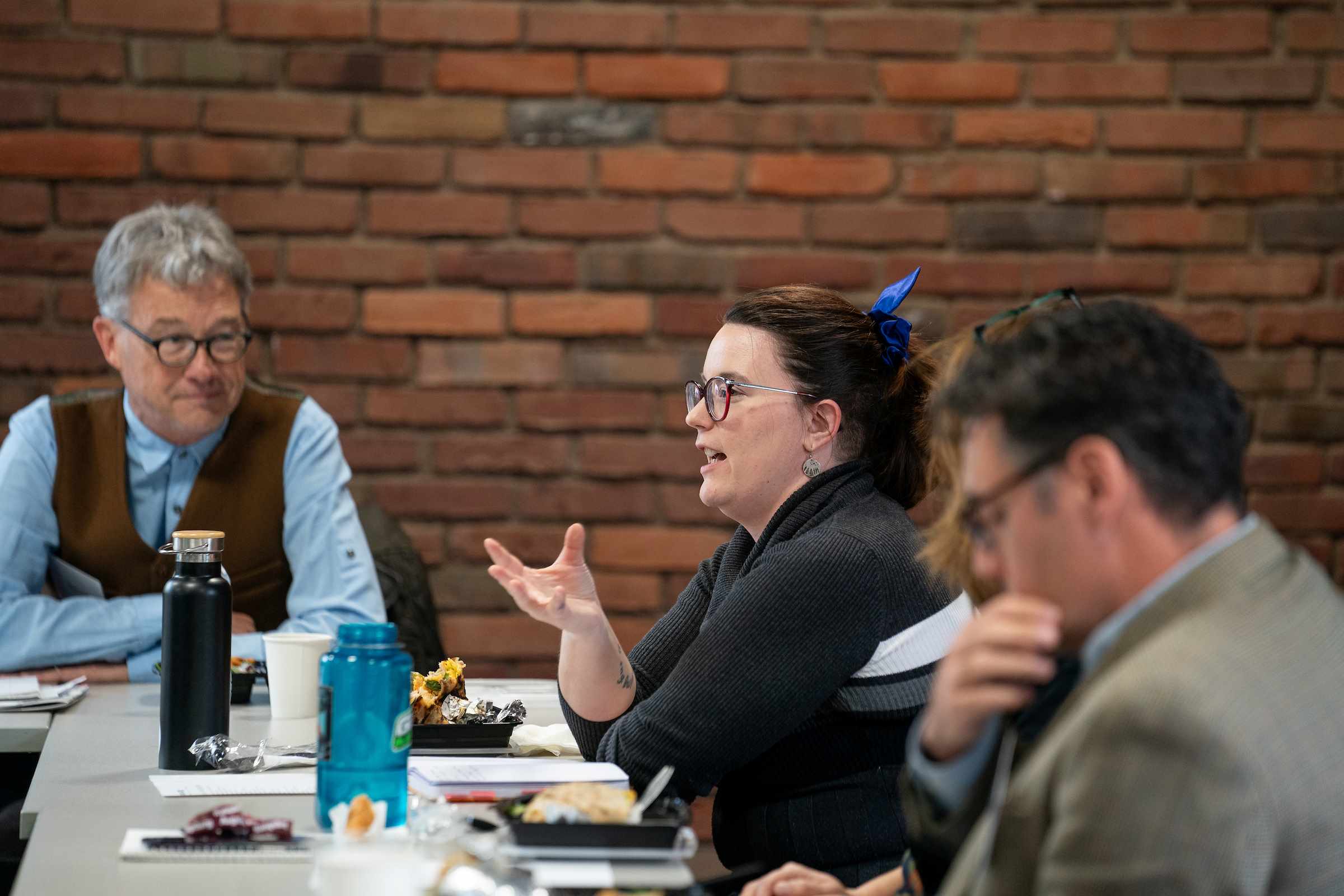 The first community practice cohort is set to begin in January. Three leaders from three different organizations will work closely together over the course of three months. Each will dig into a particular workplace challenge, gaining insights and perspective to see the whole of their situation and formulate an effective path forward.
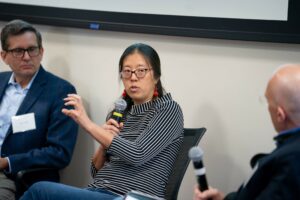
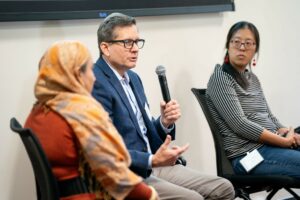 It was a gift to host the Reell Office of Seeing Things Whole’s first public event – Human-Centered Leadership for Meaningful Work. The lively panel conversation sparked curiosity for considering how to bring greater wholeness and meaning to organizations. Panelists included Najeeba Syeed, El-Hibri endowed chair and executive director of Interfaith at Augsburg University, Jun-Li Wang, associate director of Springboard for the Arts, and Kyle E. Smith, co-CEO of Reell Precision Manufacturing. Tom Henry, former CEO of Landry’s Bicycles, served as moderator.
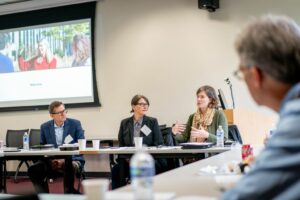
 Those who attended the roundtable dialogue which featured a presentation from MNCEO’s Executive Director Kirsten Kennedy, began a conversation on what it means to build a more holistic business system. While there were no concrete answers, participants were curious about how to shift workplace cultures to ones that are more collaborative while also acknowledging the roles business can play in the larger community.
 See better what is and what could be.