bing pixel

Faith in Action: Reflecting God’s Relational Essence

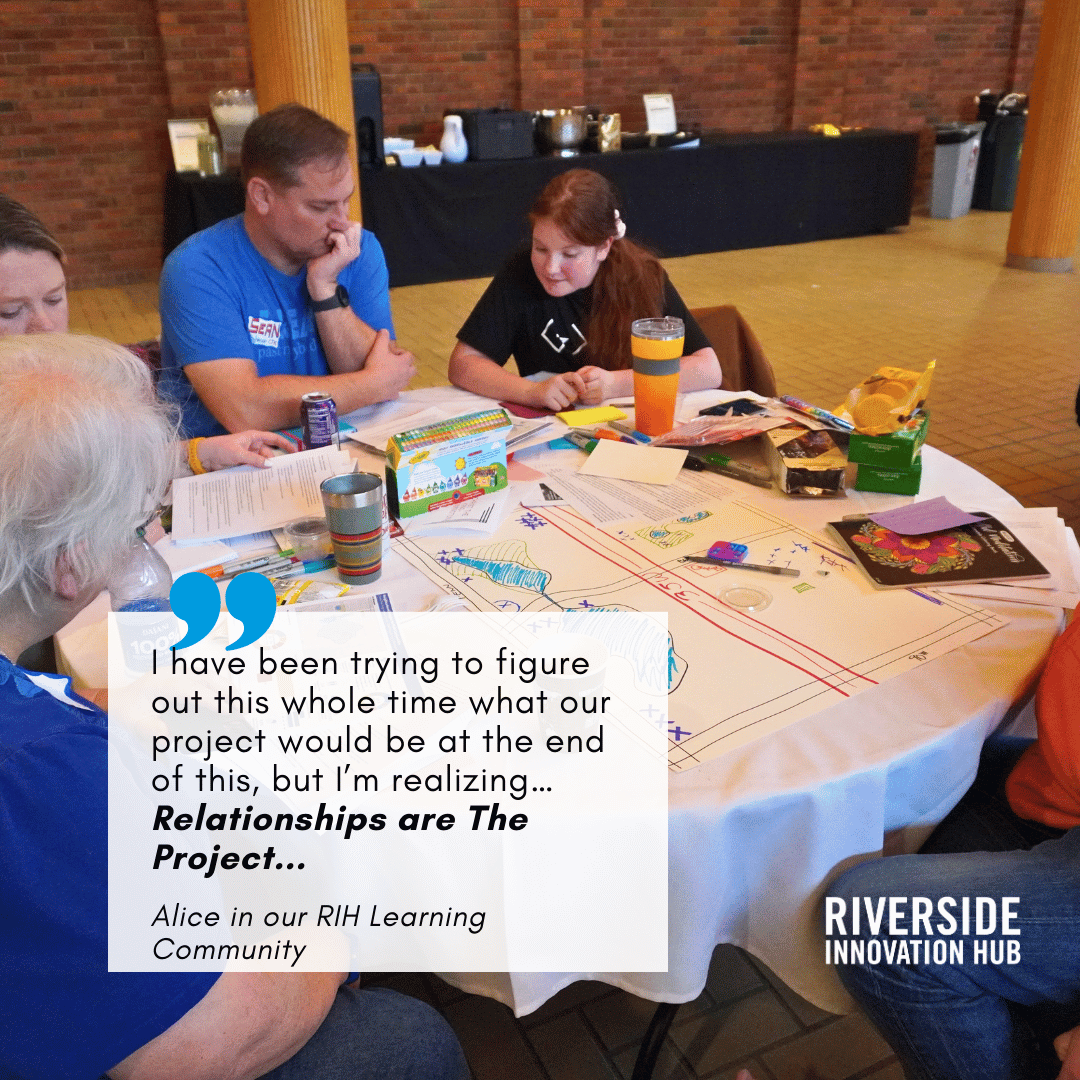
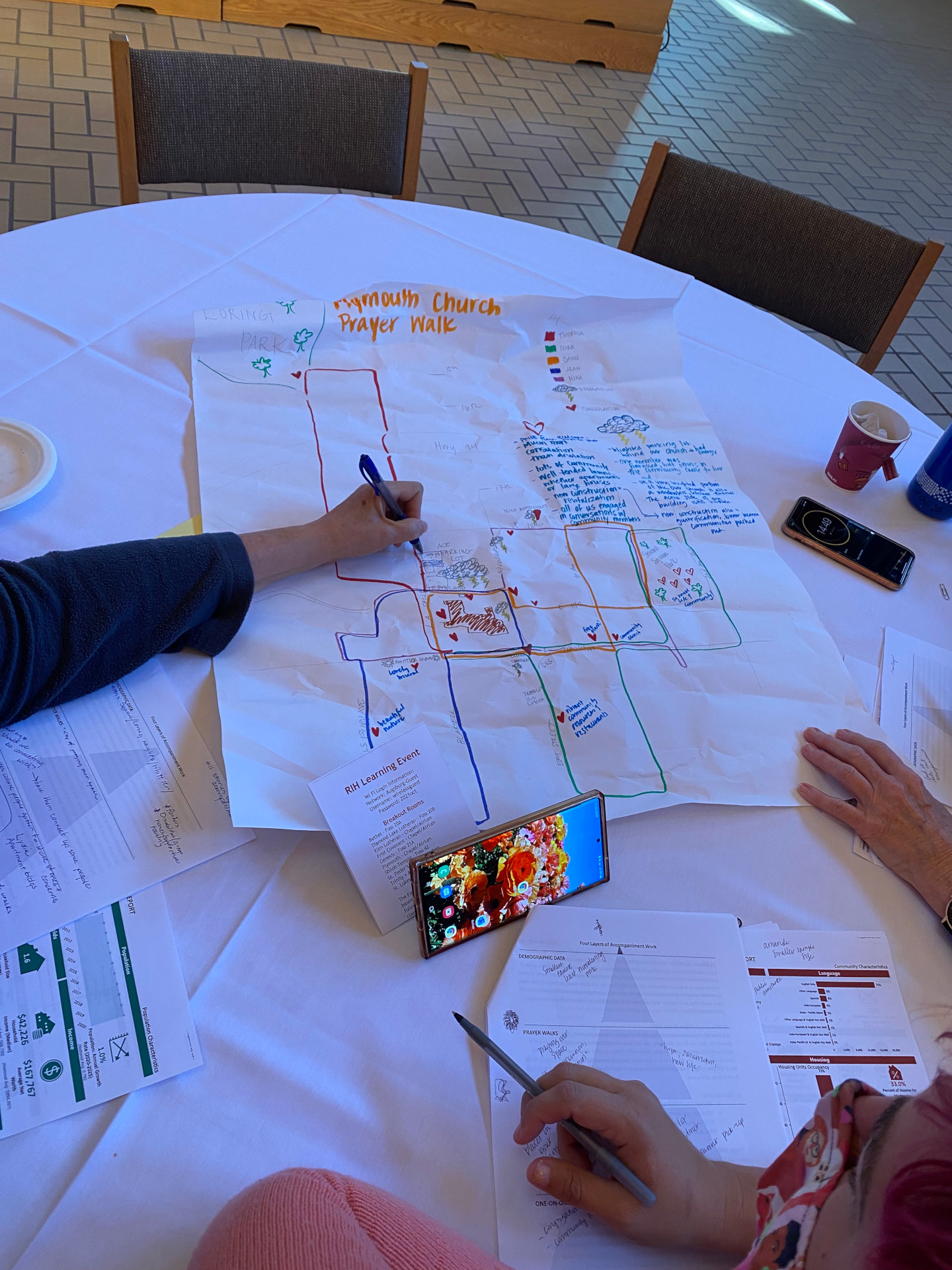
A round table of a team during our last learning community looking down at their prayer walk. "I have been trying to figure out this whole time what our project would be at the end of this, but I’m realizing…Relationships are The Project... Alice in our RIH Learning Community"In between our learning events, our facilitators Geoffrey and Brenna spend time with the congregations in cohorts. We asked Brenna and Geoffrey to reflect what they are hearing and experiencing with their learning cohorts.

Brenna’s Reflection

As we journey together through our season of accompaniment, our teams are learning a lot about their neighbors and what it means to be a public church. In our March cohort meeting we heard stories of engaging with schools, local police, members in our congregations, and local pastors from other churches. Our teams have begun to explore their neighborhoods on prayer walks and they’ve been meeting in local coffee shops and restaurants to listen and learn. They’ve engaged in public forums and local events and even attended Iftar dinners with their Muslim neighbors. Their curiosity and love for their neighbors is growing and it culminated in an exciting moment at our March cohort meeting where one of our team members interrupted the sharing time with an epiphany, “I have been trying to figure out this whole time what out project would be at the end of this, but I’m realizing…Relationships Are The Project”. They’re starting to catch it, knowing and loving your neighbor is the whole goal.

Geoffrey’s Reflection

Continue reading “Faith in Action: Reflecting God’s Relational Essence”

We Invite YOU to join us on the Riverside Collaborative!

Written by Ellen Weber

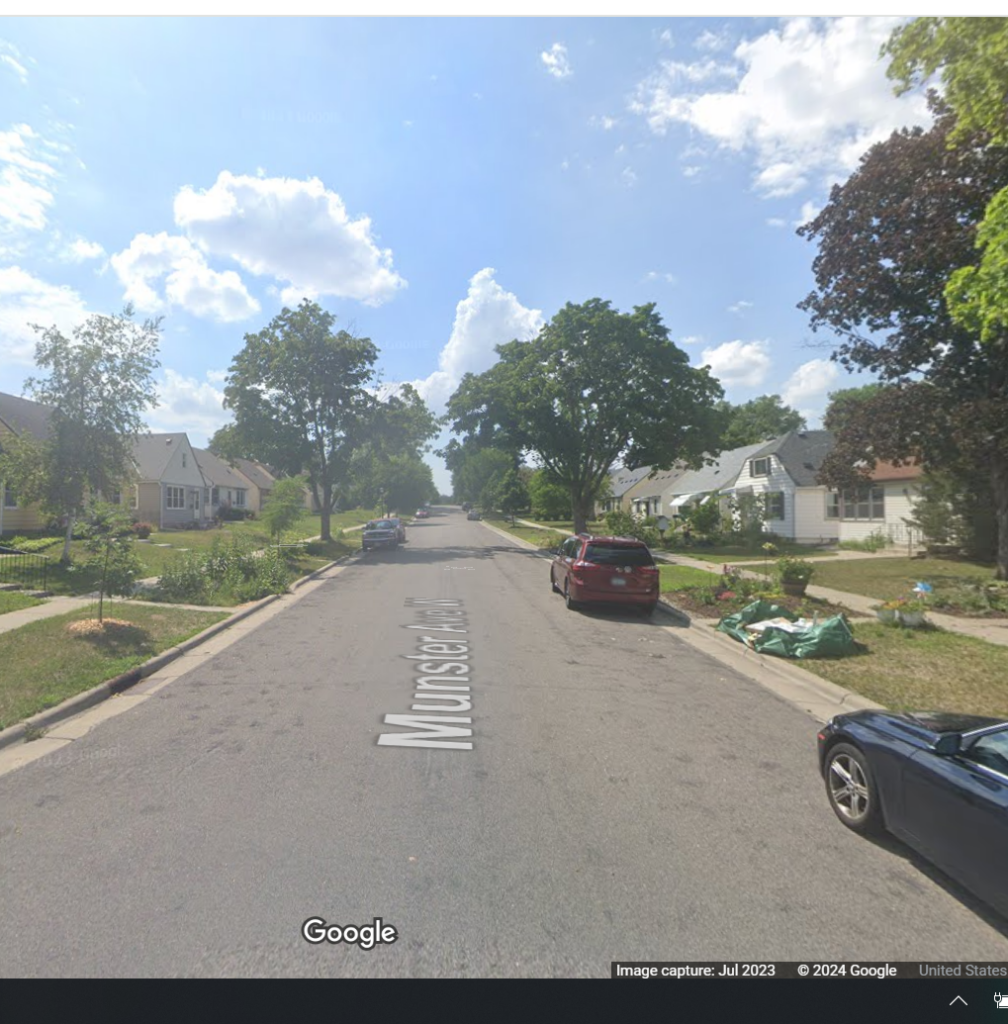
A residential street named Munster Ave lined with houses and parked cars on a sunny day.
A google map screenshot of Ellen’s street growing up.

Growing up in my Highland Park neighborhood in Saint Paul, we knew our neighbors. We knew which grass to not ride our bike on, which house had the best candy, which yard had the best hide & seek spots. We knew who to go to if we wanted to learn how to knit, which driveway we could build our chalk city in, and who gave out the best Halloween candy (It was the nuns. They loved to give out full-sized candy bars.) It was a neighborhood where I felt alive, nourished, cared for and connected. Us kids, resourced each other. We welcomed each other with open arms and ran up and down the block until the street lights came on and we had to head home.  Continue reading “We Invite YOU to join us on the Riverside Collaborative!”

One to Ones: Overcoming Barriers

Written by Geoffrey Gill

We wall ourselves to protect ourselves. Let’s take a look at a few things that have held me mentally and physically back from really connecting to others and being in community.

These Barriers or walls are things that keep me(us) from experiencing another person’s heart, soul, mind, and strength.

*The Heart (passions, hurts, motivations, dreams), 

*Soul ( personality, how they think, communicate, problem solve), 

*Mind (what they believe, worldview, values, sense of self, sense of humor, what they find sacred

*Strength (how they help, skills they bring to the table, the unique beauty they add to the world)


Chain link fence with cars on the highway in the backgroundKey Barriers to One to Ones:

When we do scary and uncomfortable things, our bodies and emotions may react in order to protect ourselves from what our bodies perceive as danger. 

We do this in many ways, here are some examples: 

  • Allowing nervousness or fear of rejection to prevent you from engaging with others can limit opportunities to form meaningful relationships. 
  • Taking the power of someone’s opinion out of the equation
  • Closed-Off Attitude: Not showing genuine interest or curiosity about others can create a barrier to forming deep connections.
  • Poor Nonverbal Engagement: Lack of eye contact and closed body language can signal disinterest, hindering the development of trust and rapport. (80%+ communication)
  • Negative Mindset: Approaching interactions with negativity or skepticism can make conversations strained and uninviting. **Being honest about something that was wrong- and acknowledging it. 
  • Anxiety and self protective responses that protect us from others (If I keep it cool then people won’t know what I really have going on and they cant use it against me)
  • Superficial Sympathy: Focusing only on surface-level sympathy instead of striving for deeper empathy and understanding can lead to shallow connections.
  • Ignoring Personal Boundaries: Pushing too hard for personal information or not respecting someone’s comfort zone can damage trust and discourage further interaction.
  • Overlooking Small Achievements: Not recognizing the importance of small steps in relationship building can lead to missed opportunities for growth and connection.
  • Unprepared Conversations: Entering into interactions without any thought or preparation can result in unproductive and awkward exchanges.
  • Self-Centered Approach: Focusing solely on what you can get out of a relationship, instead of also considering what you can contribute, can create imbalance and hinder genuine connection.
  • Lack of Presence: Being distracted or not fully engaged in conversations can make others feel undervalued and disrespected.

Continue reading “One to Ones: Overcoming Barriers”

One to Ones: Tool for Deep Conversations


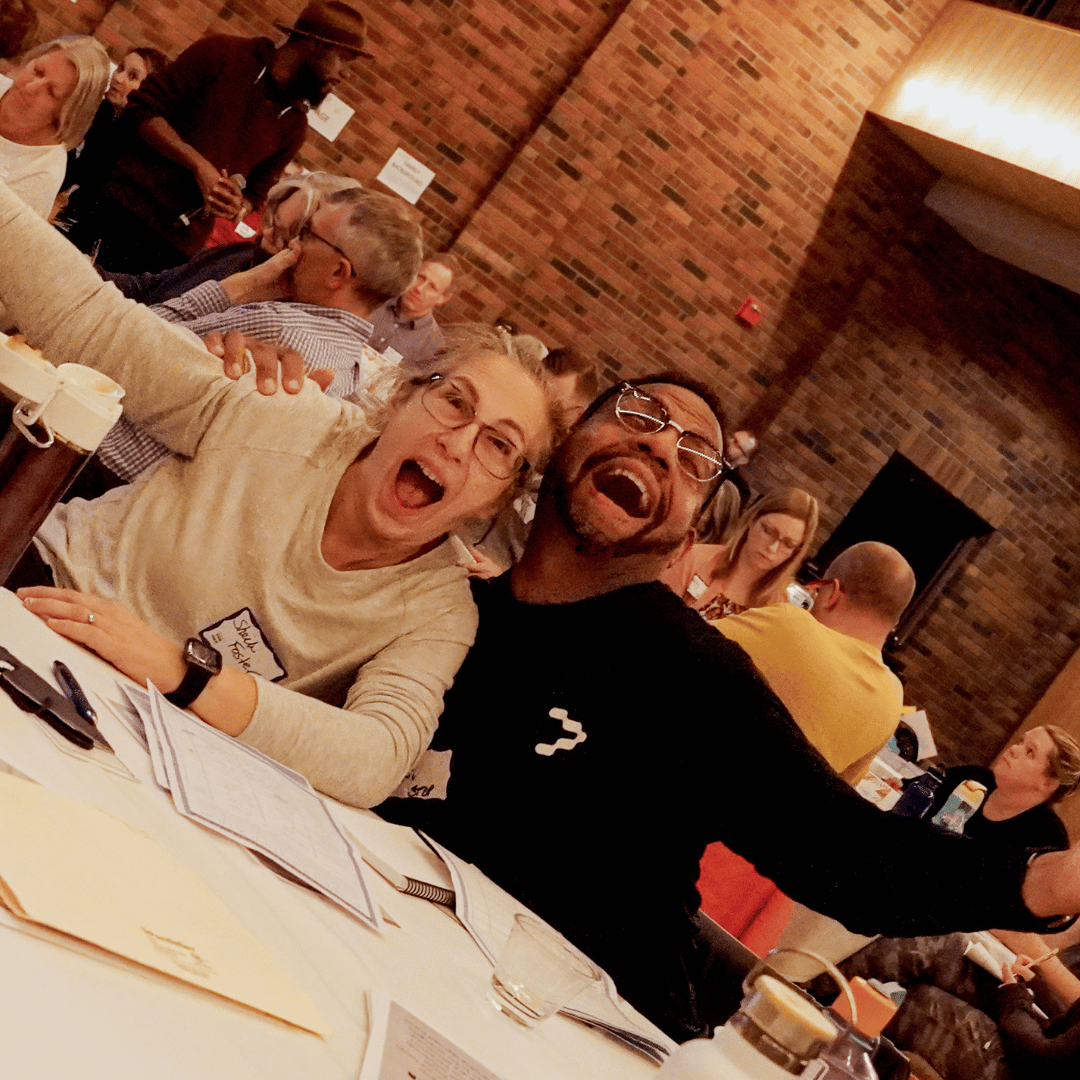
Two alum smiling while hugging at the table

The Riverside Innovation Hub is a learning community made of local congregations who gather together to learn how to be and become public church in their neighborhood contexts. We convene congregations over two years together, shaped by learning and practicing the artforms of the Public Church Framework in each congregation’s unique context.

Accompaniment is the first artform of the Public Church Framework. It is the movement out into the neighborhood to hear the neighbors’ stories. In this movement, we learn to engage and listen to the neighbor for the neighbor’s sake. We’ve simplified and categorized accompaniment into four different practices that help us hear our neighbors’ stories. This blog post dives into the last layer of accompaniment, one to ones.

You can also read more about the other three layers – Understanding Demographic Data, Prayer Walk in the Neighborhood, and Engaging Listening Posts.

Tools for Deep Conversations

Written by Brenna Zeimet 

The desire to know and be known is at the core of our being as humans. Our compassion, our actions, and our hearts are driven by the relationships and stories of the people around us. When we understand others deeply and connect their experience to our own, we are compelled to love them, it is how we are wired.

Most of us navigate the world as the star of our own story, we spend our days running our errands, chasing our goals and interacting with the friends and family that complete our story’s cast of characters. Every single day we pass dozens of other humans, on the road, in our schools, in the grocery store, even on our own block. Like extras on a movie set, those people wander through the scenes that make up our days and for the most part, we are oblivious to their existence.

What if we got curious about the characters that pass us everyday? What if when we thought about the people who we share space with we saw human beings with stories and dreams and value. What if we began to investigate the depth and beauty and friendships that we are missing out on each day?

Any good story hinges on character development, we connect with the characters when we understand their essence. We want to know their backstory, their motivation, their strengths, their goals, how they think, what they love, what breaks their heart. Knowing your neighbor involves getting to know their essence, moving beyond surface conversation about the weather and sports, and having real, deep, curious conversations – conversations that result in knowing and being known. Continue reading “One to Ones: Tool for Deep Conversations”

Accompaniment – Listening Posts

The Riverside Innovation Hub is a learning community made of local congregations who gather together to learn how to be and become public church in their neighborhood contexts. We convene congregations over two years together, shaped by learning and practicing the artforms of the Public Church Framework in each congregation’s unique context.

Accompaniment is the first artform of the Public Church Framework. It is the movement out into the neighborhood to hear the neighbors’ stories. In this movement, we learn to engage and listen to the neighbor for the neighbor’s sake. We’ve simplified and categorized accompaniment into four different practices that help us hear our neighbors’ stories. This blog post dives into the third layer accompaniment, engaging listening posts. 

You can also read more about the other three layers – Understanding Demographic Data and Prayer Walks in the Neighborhood


Listening Posts

Written by Kristina Fruge

Listening posts might just be my favorite element of accompaniment. As someone who is an introvert at heart, but who also prefers to spend the energy I do have on relationships, listening posts offer a soft landing for accompaniment to begin. Listening posts provide an invitation to be fully present and curious about new surroundings while also creating the potential of connections with neighbors in big and small ways. 

A listening post is the term we use to describe the locations that people naturally convene or gather in a neighborhood. This might include the local coffee shop, the ball fields during the summer, a local YMCA, neighborhood association meetings, the local community garden, the town grocery store, the dog park, or even a neighborhood gas station. Your particular context likely has other types of listening posts not on this list, but the common thread is that they function as a sort of hub for people who live, work, worship, pass through or play in that neighborhood to gather and connect. AND, they are great places for listening. Listening posts blend together opportunities for noticing desolation and consolation, as we do in the prayer walks, but also can open doors for one-to-one conversations with neighbors. 

Here is some advice to help you explore the listening posts in your neighborhood. Here is a pdf version of the listening post information that you can print out to share! 

Continue reading “Accompaniment – Listening Posts”

Apply Now! Invite Your Youth to Join Us at The Confluence, June 23rd-28th, 2024

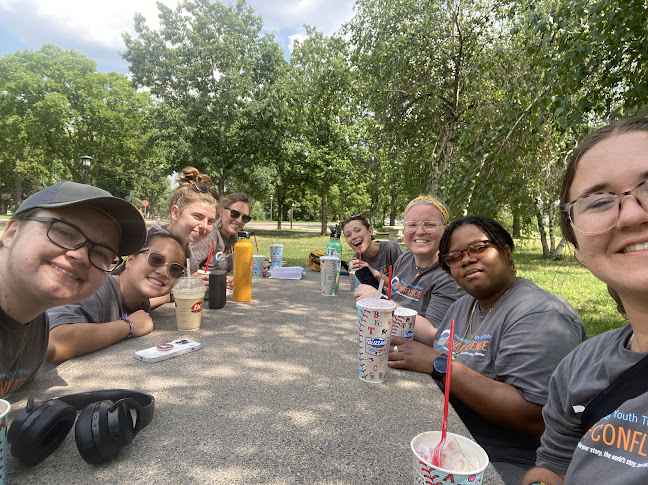
Mentors and Confluence staff at the end of the week celebration

Apply Now! Invite your youth to join us at The Confluence, June 23rd-28th, 2024

Written by Gretchen Roeck

Do you know a high school student who is trying to figure out who they are and what kind of life they want to live? Invite them to attend The Confluence

The Confluence at Augsburg University is a week where high schoolers are invited to explore their vocation — that space where their personal story, God’s story and the world’s story converge. 

Invite the youth you know to our weeklong, on-campus, summer program for high school students who have completed 9th-12th grades. 

Students will learn through:

– vocational discernment

– meaningful peer relationships  

– experiential learning with local leaders and organizations in the TwinCities

– personal reflection and discernment

– small group conversation led by current Augsburg student mentors

– spiritual practices and daily worship

– theological inquiry and study with Augsburg professor, Dr. Jeremy Myers. 

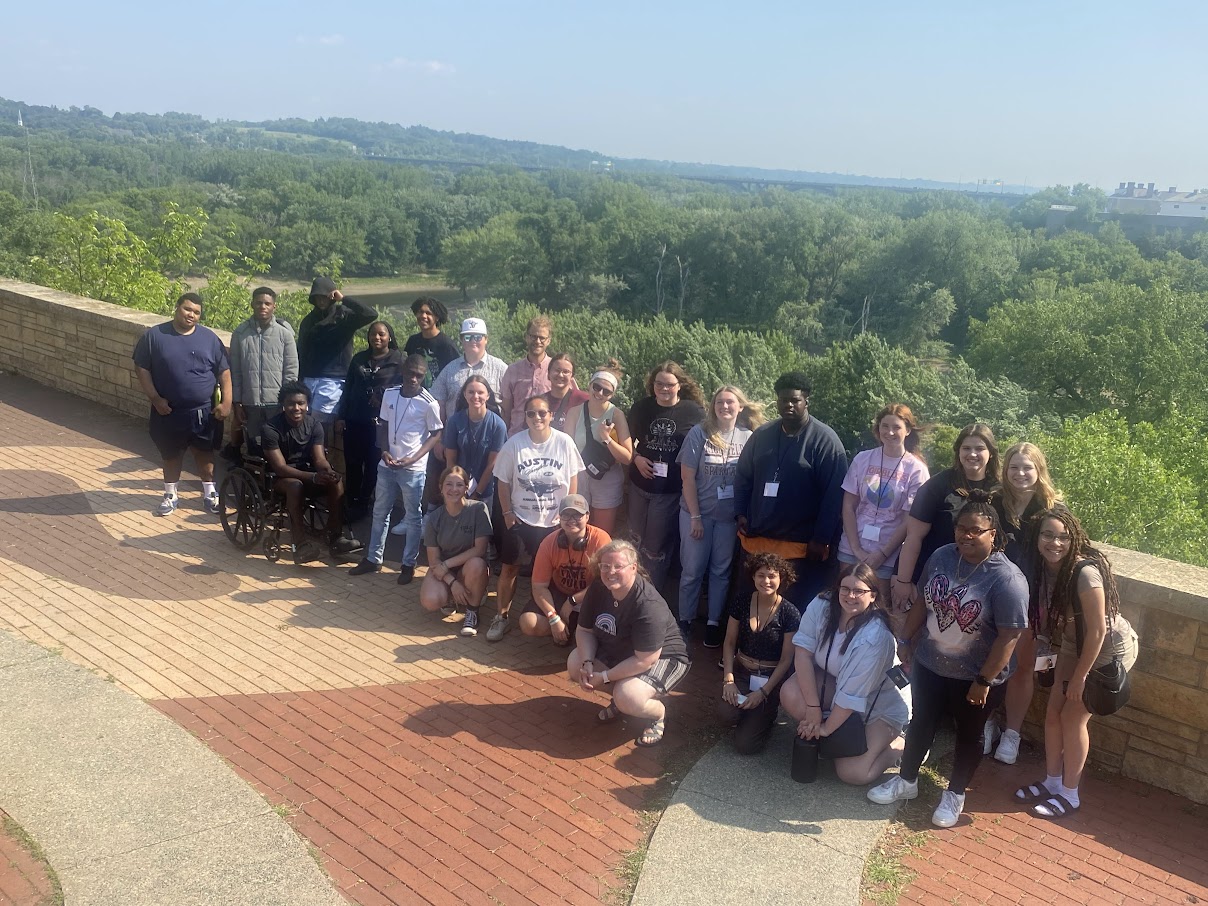
The group at the overlook over the Mississippi River.We hope to reach curious youth who want to live purposefully in relationship with their neighbors, orientated to God’s vision of a just and sustainable world for all. Questions and doubts are welcome. 

Cost: $400/participant. Participants are responsible for transportation to and from Augsburg University. 

Apply now at: https://www.augsburg.edu/confluence/join-us-this-summer/

Application Deadline: May 15th

Augsburg Scholarship Opportunity:  Students who attend The Confluence and decide to attend Augsburg University as a full-time student will receive a minimum of $20,000 applied to their financial aid package for up to four years.


Questions? 

Please contact Gretchen Roeck, Program Director

roeck@augsburg.edu

612-330-1412

augsburg.edu/confluence

Accompaniment Event Reflection

Written by facilitators Brenna and Geoffrey

In late January we hosted our learning event focused on the Artform of Accompaniment. Brenna and Geoffrey reflect below on lessons and learnings from that event. 

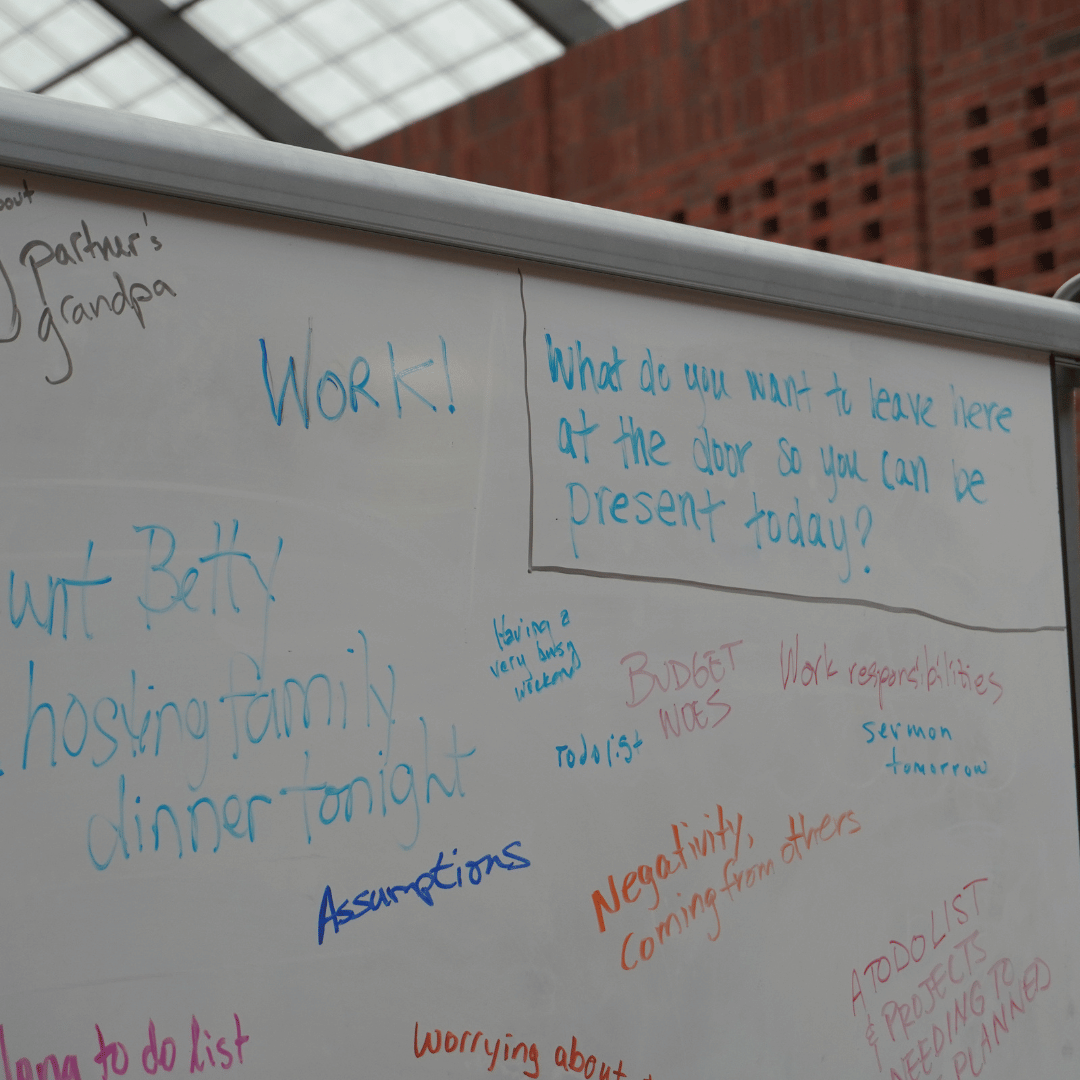
Whiteboard filled with handwritten notes in various colors, located indoors near a red-brick wall.Trust the Process: A Journey of Connection and Transformation

This past January, a gathering took place at Augsburg University, marking the beginning of an extraordinary journey for our congregations. We embarked on a path to explore and embody the art of accompaniment, a journey aimed at not just knowing about the neighbor, actually knowing the neighbor, and unraveling a new way of being church in the world.

The Essence of Accompaniment

Accompaniment, the first of four art forms we dive into, challenges us to not just know about our neighbors but to actually really know them—to see their essence. This deep understanding is fundamental, setting the stage for the upcoming art forms of interpretation, discernment, and proclamation. Our learning event was more than an educational endeavor; it was an invitation to transform how we interact and perceive the people around us. Continue reading “Accompaniment Event Reflection”

Introducing our new Program Director for The Confluence: Gretchen Roeck!

Headshot of Gretchen in front of a colorful backgroundGretchen Roeck is passionate about inviting youth to engage, critically examine and discern their gifts and call in the world. She loves empowering youth and young adults to be leaders in their own lives and communities. She dreams of building communities of people who are fully alive, connected and invested in one another’s flourishing. 

Gretchen joined the Christensen Center for Vocation team in January 2024 as the Program Director for The Confluence. The Confluence is CCV’s summer institute for high school students, offering youth an opportunity to engage in vocational discernment by exploring the ways their own story merges with God’s story and the world’s story. Gretchen is excited to be a part of the CCV team and their work to inspire and equip people of faith to creatively orient their lives and work around Jesus’ call to be neighbor. 

In addition to her work with The Confluence, Gretchen is a Priest in the Episcopal Church in Minnesota. She leads Children’s Ministry at St. Mary’s Episcopal Church in St. Paul, and is the chaplain at Circle of the Beloved, an intentional living community for young adults in North Minneapolis. Gretchen spent the last five years serving as the Priest and Internship Director at the University Episcopal Community, a campus ministry for young adults across the Twin Cities. Her ministry has been focused on children, youth and young adults –inviting them into a relationship with God, fostering their personal growth, walking alongside them and guiding young people in their spiritual and vocational journeys. She is committed to building and sustaining safe, inclusive and welcoming communities that lead towards health and wholeness for individuals and their broader communities. 

Creating safe, supportive and loving spaces extends into Gretchen’s personal life. She is the mother of two fun and creative boys, Elliott and Abraham, ages 10 and 6. Together they share a home in Minneapolis with Brigid the dog, and George and Molly, the cats.

Accompaniment: The Prayer Walk in the Neighborhood

The Riverside Innovation Hub is a learning community made of local congregations who gather together to learn how to be and become public church in their neighborhood contexts. We convene congregations over two years together, shaped by learning and practicing the artforms of the Public Church Framework in each congregation’s unique context.

Accompaniment is the first artform of the Public Church Framework. It is the movement out into the neighborhood to hear the neighbors’ stories. In this movement, we learn to engage and listen to the neighbor for the neighbor’s sake. We’ve simplified and categorized accompaniment into four different practices that help us hear our neighbors’ stories. This blog post dives into the second layer of accompaniment, a prayer walks in the neighborhood. 

You can also read more about the previous layer in our last blog post – Becoming familiar with the Demographics of your neighborhood
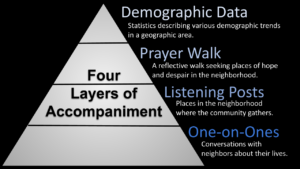
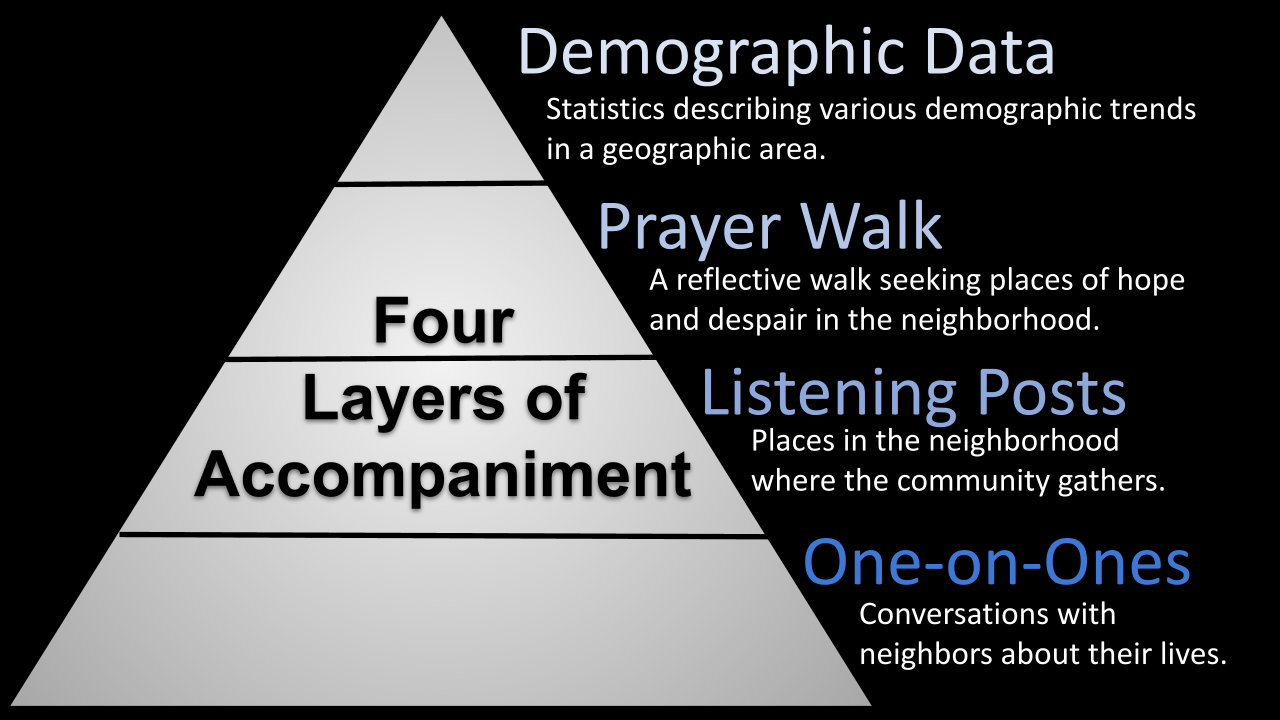
Infographic of a triangle with four layers labeled 'Demographic Data,' 'Prayer Walk,' 'Listening Posts,' and 'One-on-Ones.'

Demographic Data Statistics describing various demographic trends in a geographic area.
Prayer Walk A reflective walk seeking places of hope and despair in the neighborhood.
Four Layers of Accompaniment
Listening Posts Places in the neighborhood where the community gathers.
One-on-Ones Conversations with neighbors about their lives.Often congregations may begin at the top of the triangle and work down as a pathway to getting to know the neighbor. However, notice the proportions of each of the layers match the amount of time folks are encouraged to spend with each aspect. Demographic information begins to help us get to know things about our neighbors and may spark curiosity around things we want to learn more about, but to really get to know our neighbors, one to one conversations are at the heart of building real relationships.


The Prayer Walk in the Neighborhood

Written by Kristina Frugé 

The practice of a neighborhood prayer walk is inspired by the  Ignatian Awareness Examen, a contemplative prayer exercise that guides you through an examination of your day as you prayerfully seek moments of desolation and moments of consolation.

Moments of desolation are times of sorrow, brokenness, fear, anxiety, etc.

Moments of consolation are times of hope, healing, courage, peace, etc.
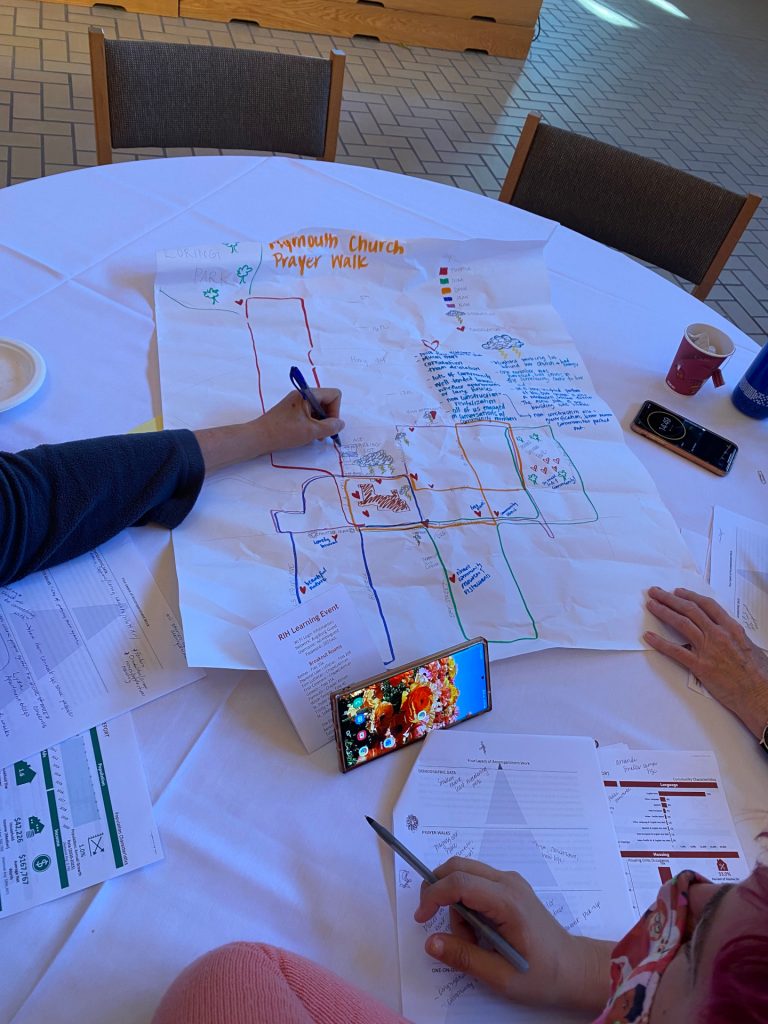
People working on a map labeled "Plymouth Church Prayer Walk" at a table.You can use the lens of desolation and consolation as you walk through the neighborhood in which your faith community is located, asking God to show you the places of desolation and consolation in that neighborhood. The general outline of this activity includes walking through the neighborhood, paying particular attention to what stands out as consolation and desolation. Then, together, with people in your faith community, reflect on what you saw, felt, sensed and heard and map the locations of those places of consolation and desolation on a shared map. You will find some simple instructions at the end of this post to help you plan for a prayer walk. However, while this activity is fairly straightforward, there are some important aspects to be aware of as you begin.

In all of our efforts to become vital neighbors, we will find ourselves encountering people and places we don’t know or don’t know very well. We will encounter differences between ourselves and others – whether it be racially, religiously, socio-economically, generationally, or across so many other distinctions. We also expect to experience connection as we discover similarities – love of the same local business, or our pets, or our children, or perhaps share similar fears or longings for ourselves and our neighborhoods.  Continue reading “Accompaniment: The Prayer Walk in the Neighborhood”

Becoming Familiar with the Demographics of Your Neighborhood

The Riverside Innovation Hub is a learning community made of local congregations who gather together to learn how to be and become public church in their neighborhood contexts. We convene congregations over two years together, shaped by learning and practicing the artforms of the Public Church Framework in each congregation’s unique context.

Accompaniment is the first artform of the Public Church Framework. It is the movement out into the neighborhood to hear the neighbors’ stories. In this movement, we learn to engage and listen to the neighbor for the neighbor’s sake. We’ve simplified and categorized accompaniment into four different practices that help us hear our neighbors’ stories. This blog post dives into the first layer of accompaniment, the Demographics of the Neighborhood. 


Introduction

Written by Jeremy Myers

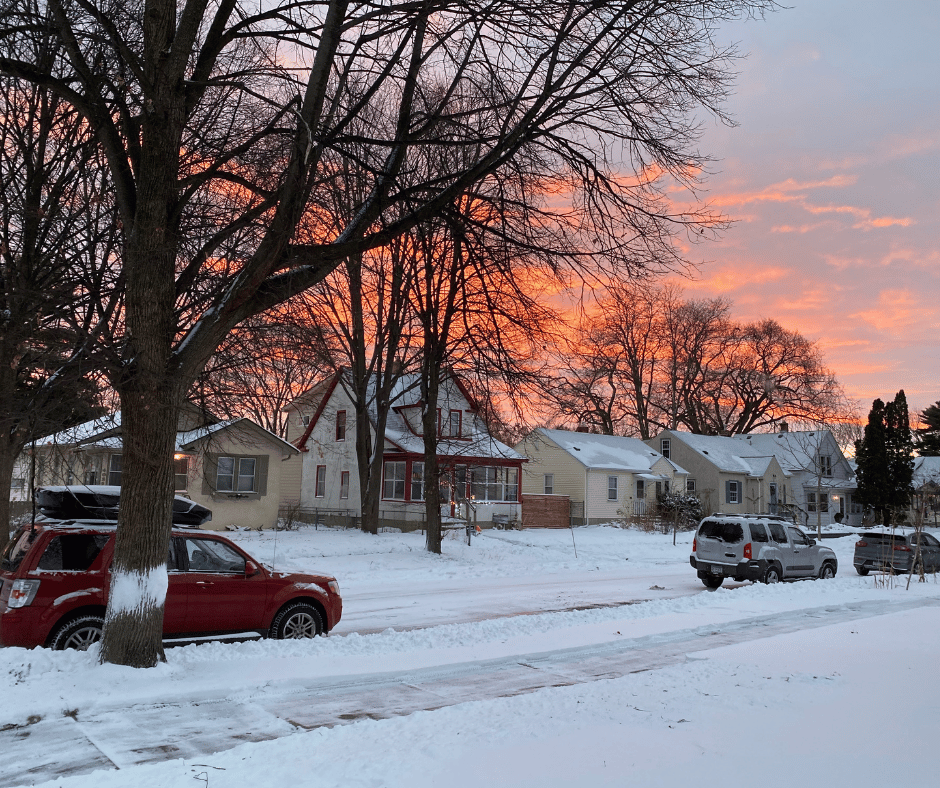
Kristina's neighborhood street with snow in the evening as the sun is settingSummary and Learning Outcomes

This lesson is intended to help individuals and/ or teams gather the demographic data of their particular neighborhoods and begin reflecting on that data in order to gain more insight into those who live in that particular neighborhood. Completing this lesson should help you:

  1. be able to find and collect the demographic data of those who live within a particular neighborhood.
  2. know more about the people who live their lives within this particular neighborhood.
  3. develop a deeper sense of empathy for these neighbors and become curious about how you might get to know them better.

Preparation

  1. Use “Preparing to Lead the Lesson Plan” to help you complete these following steps in preparation for leading this lesson.
  2. Read “What is Accompaniment?” and “Why Demographics?”.
  3. Generate your Demographic Report and familiarize yourself with it.
  4. Gather the following materials below. 

Materials

Continue reading “Becoming Familiar with the Demographics of Your Neighborhood”